Contents
There is a version of self care gifts for women that has become so familiar it has almost lost meaning: the bath kit, the scented candle set, the subscription box that arrives once and is half-forgotten by the following month. These gifts are chosen with genuine care. The problem is not intention — it is longevity. Most conventional self-care gifts are consumable, and the care they offer is, by nature, temporary. The bath salts run out. The candle burns down. The self care gift box is enjoyed for a weekend and then assimilated into the ordinary texture of daily life, leaving nothing behind.
A different category exists — one that is less visible in the gifting conversation but more durable in its effect. It is the category of objects that continue to offer what they offered on the first day, every subsequent day, because the value they carry is not consumable. A handmade object made with genuine craft — one that rewards holding, that reveals more at each encounter, that develops character through use rather than diminishing with it — is a form of self care that compounds rather than depletes. This article makes the case for that kind of gift: what it is, why it works, and who it is for.
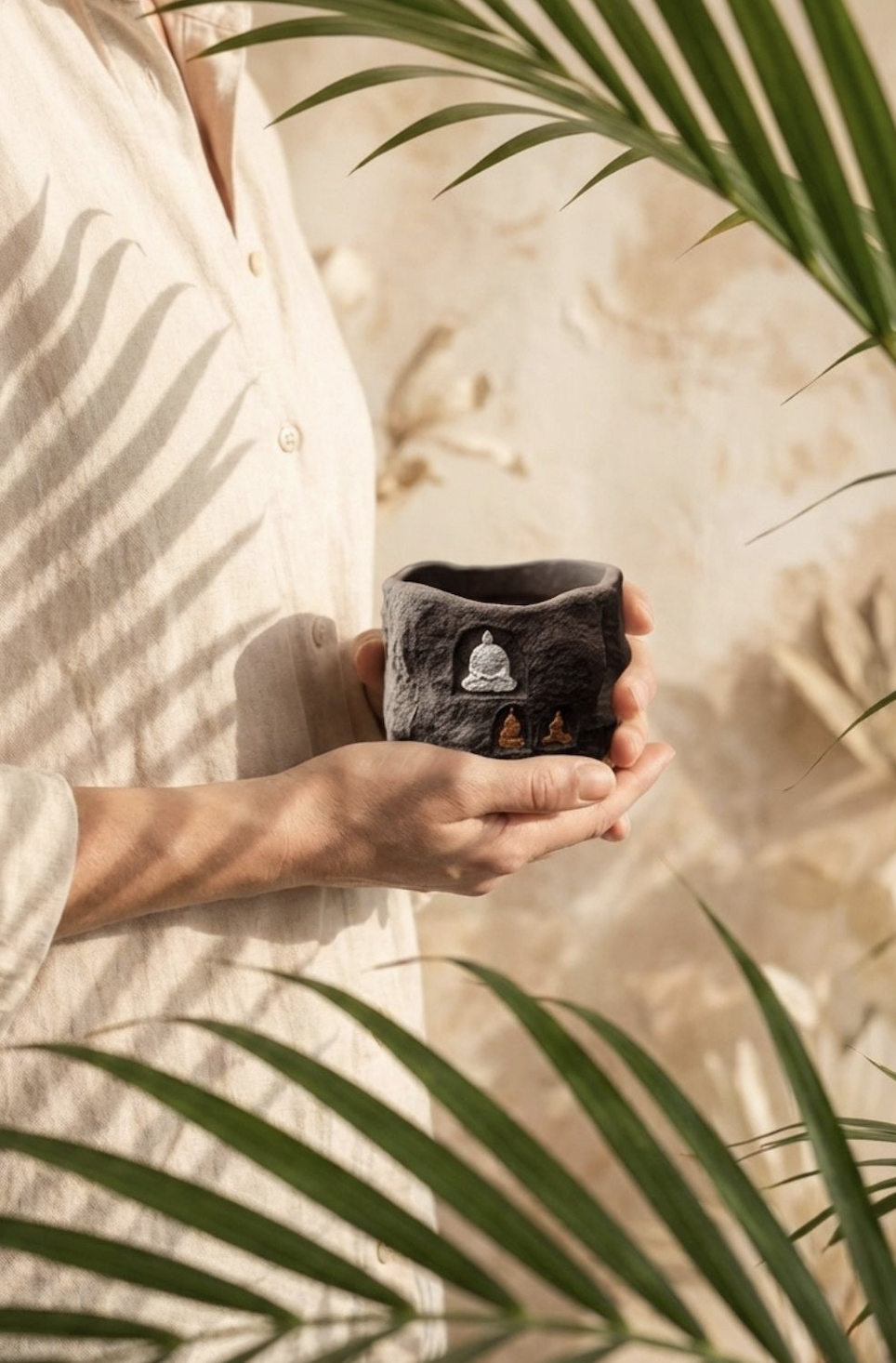
Sunlit hands cradling a small batch ceramic cup with ice crackle glaze & delicate gold Buddha detail—the perfect tactile mindfulness piece for self care gifts for women
1. The Problem with Most Self-Care Gifts
As BetterUp's analysis of self-care gifts and mental health notes, the popular image of self-care as a social-media-style spa weekend or luxury purchase misses what self-care actually is: the ongoing practice of attending to one's own needs, presence, and wellbeing in a way that is sustainable across daily life rather than concentrated in occasional moments of indulgence. The most effective self-care practices are not events. They are habits — small, consistent acts of attention that accumulate over time into a different relationship with oneself.
This distinction matters for gifting because it changes what a good self care gifts for women actually looks like. If self-care is a habit rather than an occasion, the most useful gifts are those that support and anchor that habit — that are present in the daily routine, that serve as reminders of the quality of attention the recipient has decided to bring to her own life. A candle supports this for as long as it burns. An object of genuine craft supports it for as long as it is used — which, if the object is well-made, is indefinitely.
The benefits of self care gifts that last are measurably different from those that are consumed. A gift that is present every morning — that is held, noticed, returned to — functions as what psychologists call a practice trigger: a physical cue that activates the quality of awareness associated with it. A handmade cup on a meditation altar, a carefully chosen ceramic object on a desk, a piece of small batch ceramics that carries enough visual and tactile complexity to reward daily attention — these objects become embedded in the ritual of their owner's day in a way that consumable gifts cannot.
2. What Tactile Mindfulness Actually Is — and Why It Matters
The term tactile mindfulness refers to the practice of using physical sensation — specifically, the deliberate engagement with texture, weight, and surface quality — as a grounding technique for present-moment awareness. It is one of the oldest and most physiologically direct forms of mindfulness practice, and it has a solid evidence base in both clinical psychology and neuroscience.
Research cited by Positive Psychology on grounding techniques identifies physical grounding — concentrating on tactile sensations, rubbing fingers across different textures, deliberately attending to the weight and surface of an object held in the hand — as one of the most effective methods for interrupting anxiety cycles and returning attention to the present moment. The mechanism is direct: when you touch something with intention, your brain shifts focus from abstract worries to concrete sensory input. Ahead App's analysis of tactile grounding explains this as sensory grounding — the process by which physical sensation overrides the anxious thought patterns that pull attention away from the present.
The practical implication for gifting: an object with genuine tactile complexity — one that has weight, surface variation, the kind of texture that registers differently at different points of contact — is not merely decorative. It is a tactile mindfulness tool. As our guide to creating a minimalist meditation corner explains, the most effective focal objects for a practice space are those with enough physical presence and surface complexity to anchor attention without demanding it — objects that are worth returning to, many times a day, without becoming familiar to the point of invisibility.
3. The Case for Artisanal Investment Pieces
The phrase artisanal investment pieces describes a category of objects that exist between art and utility: handmade with genuine craft, used in daily life, and capable of appreciating in personal value rather than diminishing with use. In ceramics, this category includes small batch ceramics from independent workshops — pieces formed by hand from specific clay bodies, fired in specific ways, carrying in their surfaces the visual and tactile record of their making.
What makes these artisanal investment pieces valuable as self-care gifts is the same quality that makes them valuable as objects: they reward sustained attention. A piece of handmade ceramic with visible mineral texture, natural glaze variation, and the marks of its firing reveals something different at the tenth encounter than it did at the first. As our analysis of why handmade objects hold attention differently from manufactured ones explores, the surface of a hand-formed piece carries information — about the clay body, the forming process, the kiln — that a slip-cast or machine-made piece structurally cannot. This information is not decoration. It is the material record of something real, and it is what gives the object its quality of presence.
For luxury self care gifts for women in the meditation, yoga, and contemplative practice communities, this quality of presence is precisely what is sought. The woman who spends twenty minutes each morning in meditation is not looking for novelty in the objects that surround her practice. She is looking for objects that are worth being present with — that hold their interest, their weight, their character across daily use. A well-chosen piece of small batch ceramics does this. A conventional self care gift box does not.
4. A Cup Is Not Just a Cup
The tea cup is the most intimate domestic vessel in East Asian material culture — small enough to be held in both hands, warm enough to transfer heat to the body, used at the specific moments of the day (morning, midday pause, evening transition) when people are most likely to be briefly present rather than rushing. In the context of a self-care practice, this makes the cup a particularly effective anchor object: it is present at the right moments, it engages the hands and the warmth receptors simultaneously, and it provides a consistent sensory experience that becomes associated, over time, with the quality of pause it accompanies.
You do not need to be a tea drinker for this logic to apply. A handmade cup that holds morning coffee, herbal infusions, or simply warm water functions identically as a tactile mindfulness anchor — what matters is the regularity of the encounter and the quality of the object being encountered. A cup of genuine craft, held every morning before the day starts, is a form of self care gifts for women that requires no maintenance, no subscription, no refill. As our guide to tea rituals as a form of spiritual practice explores, the value of a morning ritual is not in the specific beverage but in the consistent quality of attention it anchors.
A handmade cup with Buddhist imagery pressed into its surface adds a further dimension: the imagery functions as a tactile mindfulness cue at the moment of holding, connecting the physical act of holding warm clay to the quality of stillness the imagery represents. For practitioners of meditation or yoga who are not necessarily religious, this is precisely the kind of object that fits their practice — spiritually resonant in visual vocabulary, materially honest in craft, and completely secular in its function. It is a cup. It holds warmth. And every time it is held, it offers a brief invitation to notice that.
5. Who This Kind of Gift Is Really For
The honest answer is that artisanal investment pieces as self care gifts for women are not for everyone — and recognising who they are for is part of choosing them well. They are not the right choice for someone who primarily values novelty, or who expects a self-care gift to feel immediately luxurious in a conventional, spa-adjacent sense. They are the right choice for the woman whose self-care practice is already established and thoughtful — who has a meditation corner, a yoga practice, or a morning ritual that she returns to consistently, and who would value an object of genuine craft as a companion to that practice rather than a replacement for it.
As gifts for new moms self care, a handmade ceramic cup occupies a specific position. New mothers frequently lose access to the self-care rituals they had before — the yoga class, the meditation session, the long morning. What survives is often the simpler ritual: the warm drink, the quiet moment before the house wakes. A handmade cup that holds that moment — that offers a quality of tactile presence at the one pause of the day that remains — is a form of gifts for new moms self care that acknowledges where she actually is rather than where she hoped to be. As our guide to meaningful gifts for people at different points in their spiritual and mindfulness journey explores, the most resonant gifts are those that meet the recipient in her actual life, not in an idealised version of it.
For self care gifts for mom from adult children, the same logic applies at a different life stage. A mother who has spent decades attending to others, and who is only beginning to reclaim time and attention for herself, often responds more deeply to an object of genuine craft than to a conventional spa gift — because the craft object communicates something that a self care gift box does not: that her daily life, the ordinary moments of her morning, the cup in her hand before the day begins, are worth something beautiful. This is a different message than "relax for a weekend." It is the message that her everyday experience of being present with herself matters enough to furnish with something real.
6. Frequently Asked Questions
What are the benefits of self care gifts that last over time versus consumable gifts?
The primary difference is in how the benefit accumulates. A consumable gift — bath salts, a candle, a self care gift box — delivers its value over the period of use and then is gone. An object of genuine craft delivers its value continuously, across every day of use, and typically deepens in personal meaning over time rather than diminishing. For a woman with an established mindfulness or self-care practice, this means the gift is present at every morning session, every meditation, every moment of quiet — not as a memory of a gift received, but as an active companion to the practice itself. The research on tactile mindfulness confirms that objects present in the daily environment function as practice triggers: physical cues that activate the quality of awareness associated with them. A gift that is present every day, that is held and noticed consistently, provides this function in a way that a consumable gift cannot.
Is a handmade ceramic cup an appropriate luxury self care gifts for women for someone who doesn't drink tea?
Yes. The function of a handmade cup as a tactile mindfulness object does not depend on its contents. A cup that holds morning coffee, herbal infusions, warm water with lemon, or any other warm drink functions identically as a self-care anchor — what matters is the regularity of the encounter and the quality of the object. The cup's value is in being held: in the weight, the warmth it transfers, the surface that the hands register at the specific moment of the morning when the person is most likely to be briefly present. Whether she is a dedicated tea practitioner or simply someone who takes five minutes with a warm drink before the day starts, the cup serves the same function.
How do I choose a piece of small batch ceramics as a gift for someone whose taste I'm not certain of?
Three principles help. First, look for material honesty — pieces made from natural materials that show the process of their making (visible mineral texture, natural glaze variation, the marks of the kiln) tend to appeal across aesthetic preferences because they communicate craft quality regardless of specific style. Second, favour smaller scale over larger — a cup or small vessel can be integrated into almost any home and any daily practice without requiring a specific place or aesthetic context. Third, look for surface complexity over visual busyness — a piece with varied texture and subtle colour is interesting to hold and look at without being decorative in a way that might conflict with the recipient's existing aesthetic. The most successful artisanal investment pieces as gifts are those that are visually restrained but materially rich: quiet enough to live with, complex enough to reward attention.
A Final Note
Buying yourself a good cup — or choosing one for someone you care about — is an act of a specific kind of belief: that the ordinary moments of daily life are worth furnishing with something real. That the five minutes of warmth before the day starts, or the pause in the afternoon when everything is briefly still, deserve an object of genuine craft rather than the nearest available vessel. This is what self care gifts for women at their best are communicating — not that the recipient should indulge herself for a weekend, but that the daily texture of her attention to herself matters. A handmade cup is a small investment in that belief. And unlike most investments, this one pays daily, in the specific weight and warmth of an object worth holding.
Related Articles
References


