Contents
Introduction: The Soul of the Vessel
A handmade tea cup is not finished when it leaves the kiln. The firing process — whether days of wood combustion in an anagama, or the precisely controlled heat of a ceramic studio — produces a body of clay that is structurally complete but experientially unformed. The cup has its shape, its glaze, its mineral surface. What it does not yet have is its character. That develops through use, through the slow accumulation of tea compounds in the pores of the clay, through the patina that builds across months and years of daily practice. A wabi sabi pottery cup is, in the most literal sense, still becoming.
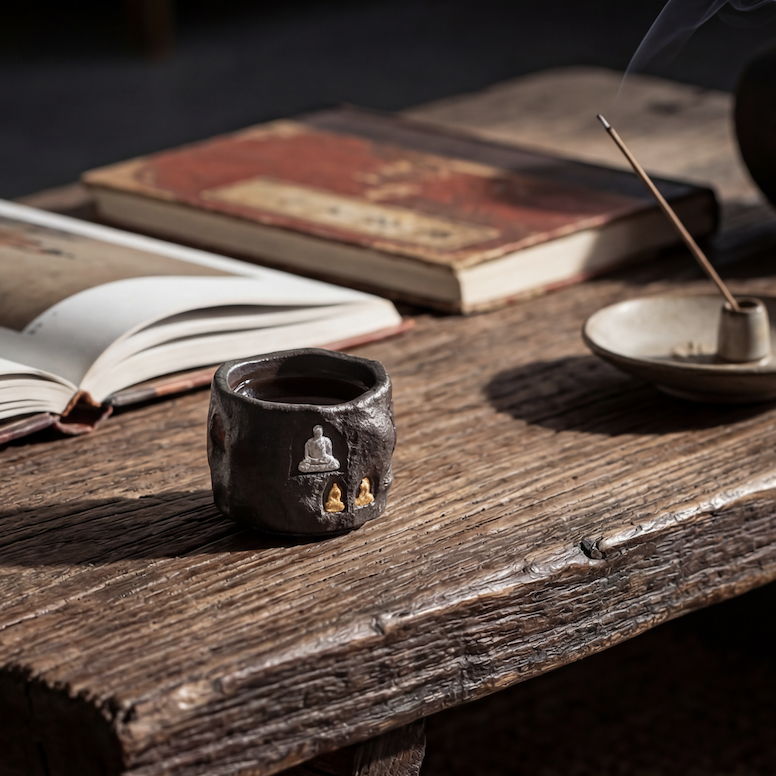
Elevate your daily tea ritual with authentic wabi sabi pottery. This handcrafted wood-fired ceramics cup isn't just functional; it's designed to develop a rich, living patina with every use, turning simple maintenance into a spiritual practice.
Understanding how to care for a handmade ceramic tea cup requires first understanding what makes it different from production ceramics. As our guide to rock-mineral clay explains, the porous, semi-vitrified structure of mineral-rich stoneware — in which quartz, mica, and iron compounds that did not fully melt during firing create complex surface microcavities — is the same structure that makes the cup interact with tea rather than simply contain it. This porosity is both the cup's most valuable quality and the reason its care differs fundamentally from washing a glass or a glazed porcelain mug.
This guide covers every stage of that care: the seasoning ritual that begins the relationship between cup and drinker, the daily practices that sustain it, the science behind the patina development that wabi sabi pottery practitioners prize, and the specific techniques for tea stain removal when needed. It also addresses the different requirements of different glaze types, because a wood-fired cup with heavy ash glaze, a Shino-glazed cup with ice crackle texture, and an unglazed rock-mineral surface each have specific needs.
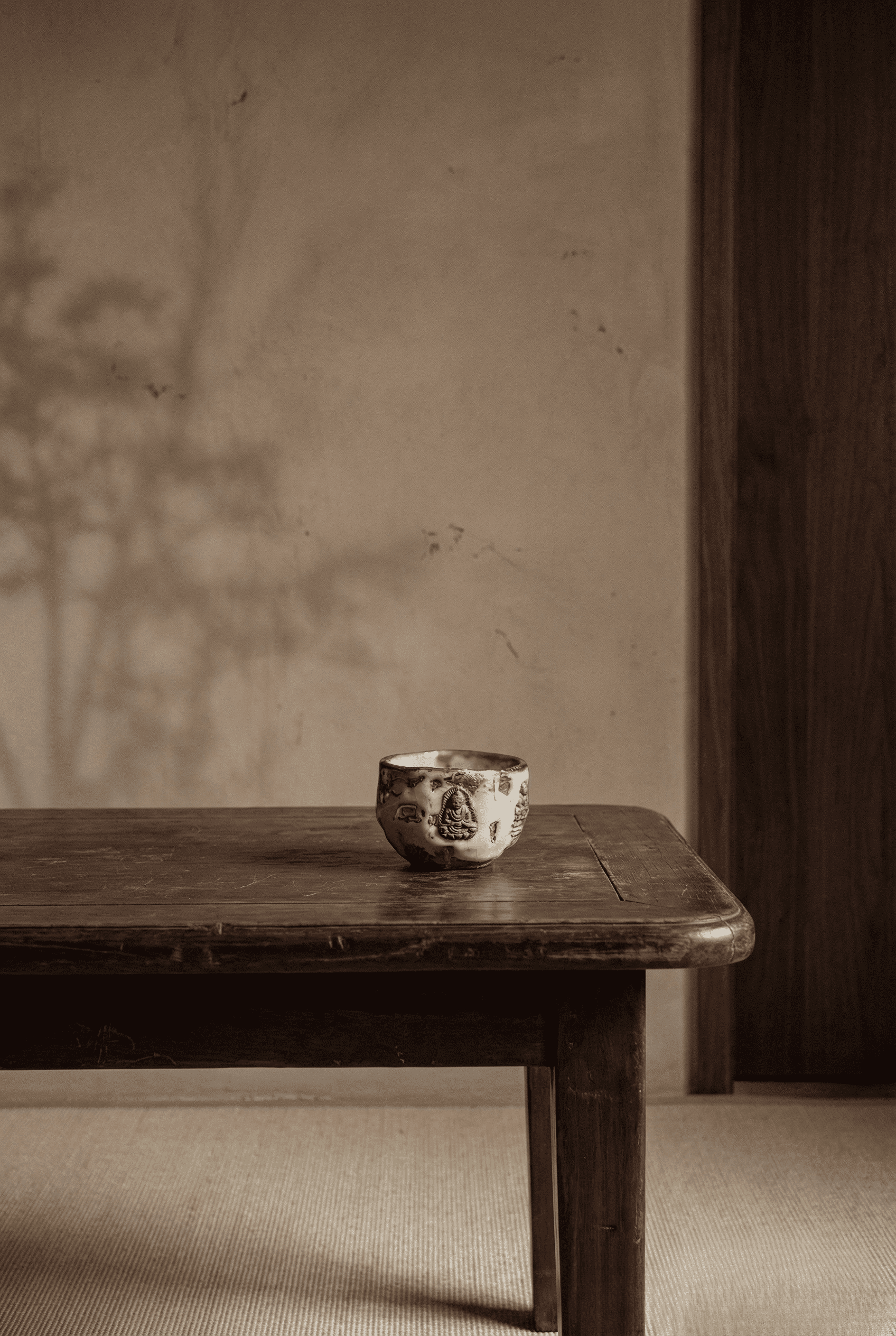
1. The First Ritual: Seasoning Your Cup
Before you use a new handmade tea cup for the first time, a brief seasoning process serves several functions: it removes any residual kiln dust or firing odours from the surface, opens the clay's porous structure to begin accepting tea compounds, and establishes the first layer of the patina that will develop across the cup's lifetime. This initial tea ritual is not ceremony for ceremony's sake — it has practical consequences for the cup's behaviour from the first brew onward.
Step 1 — Rinse with warm water. Before anything else, rinse the cup inside and out with warm (not hot) water. Use your fingers to gently wipe the interior walls. This removes any loose clay particles, dust from storage or shipping, and the neutral blankness of unused clay. Empty and allow to air dry briefly.
Step 2 — Gentle first soak. Fill a basin or bowl with warm water and submerge the cup for 10 to 15 minutes. This allows the clay body to absorb water evenly, expanding its pores gently rather than subjecting them to the thermal shock of immediate boiling water. A careful soak is preferable to boiling for high-fired clay vessels, as vigorous boiling can cause agitation that risks cracking.
Step 3 — First brew. Brew a moderate infusion of the tea you intend to use most frequently in this cup. Pour it into the cup, allow it to sit for 5 minutes, then empty it. If possible, also rinse the exterior of the cup with the same tea. This begins the process of conditioning the clay surface with the specific tea compounds you will continue to introduce through regular use. For rock-mineral cups intended for pu-erh or heavily oxidised oolongs, use those teas. For cups you intend for green or white tea, use those.
What to avoid during seasoning. Do not use soap or detergent at any stage — the clay will absorb these compounds and they will affect subsequent brews. Do not subject a cold cup to boiling water without the warm water pre-soak, as the thermal differential can stress the clay body and, over time, create micro-fractures. Do not season with a tea you do not intend to use in this cup regularly.
2. Daily Care: Do's and Don'ts
The daily care of a handmade ceramic cup is simpler than most people expect, but it differs enough from cleaning ordinary mugs that the differences are worth stating clearly. The guiding principle is the same throughout: preserve the cup's porous surface and the tea compounds it has accumulated, while removing the residues that do not contribute to its development.
After each use:
Do: Empty the cup promptly after use. Rinse with warm water — not boiling, not cold — using your fingers or a soft cloth to remove any loose tea residue. Allow to air dry completely with the cup tilted or inverted so air circulates inside. Wipe the exterior with a damp cloth if needed.
Don't: Use soap, dish detergent, or any chemical cleaning agent. The porous surface of unglazed or partially-glazed stoneware absorbs aromatic compounds. Soap introduces compounds that compete with — and can permanently alter — the tea patina you are developing. Even a single washing with dish soap can affect the flavour of subsequent brews, particularly in a cup that has already built up significant seasoning.
Don't: Store the cup in a closed container while still slightly damp. The micro-porous structure of mineral-rich clay can harbour mould if moisture is trapped. Always store with the opening upward or tilted, and ensure the cup is fully dry before any enclosed storage.
Don't: Put a wabi sabi pottery cup in the dishwasher. The combination of hot water, detergent, and mechanical agitation will strip any accumulated patina, introduce soap compounds into the clay, and potentially damage glazed surfaces through repeated thermal cycling.
Between sessions:
If you brew tea in the same cup daily, a simple warm water rinse after each use is sufficient. If you use the cup less frequently, a brief rinse and thorough drying before storage is enough. As our guide to the role of handmade surface complexity in daily use explores, the surface of a porous handmade cup develops its character precisely through consistent, repeated contact — each use adding infinitesimally to the accumulated record of the cup's history.
3. Embracing the Patina: The Beauty of Tea Stains
In the context of wabi sabi pottery and traditional East Asian tea culture, the patina development of a well-used cup is not a problem to be solved but a quality to be cultivated. The internal chadou — the tea-stained surface that builds across months and years of dedicated use — is considered evidence of the cup's history and the depth of its relationship with its owner. A new cup, pristine and unused, is considered less interesting than one that carries the accumulated record of thousands of brews.
The chemistry of patina development is straightforward. Tea contains tannins — polyphenolic compounds that give tea its colour and astringency. These compounds have a natural affinity for porous surfaces, binding to the mineral structure of the clay and building up over time as a thin, stable layer. In rock-mineral clay cups, the quartz and mica particles in the body and the semi-vitrified matrix between them provide numerous attachment points for tannin molecules. The resulting patina is not a stain in the conventional sense — it is a chemically bonded layer that has become part of the cup's surface.
This is also the mechanism through which a well-seasoned cup can gently modify the character of the tea brewed in it. Iron oxides in the clay surface can bind with tea polyphenols, selectively sequestering some bitter compounds and allowing the sweeter amino acids to be perceived more prominently. The patina that develops from repeated brewing is not just visual — it is functional.
The practical implication: light, even tea colouration on the interior of a cup that has been used consistently for weeks or months is not something to remove. It is the cup working as intended. Rinse with warm water after use, dry completely, and allow the patina to develop undisturbed. The exterior of the cup, particularly in wood-fired ceramics with ash glaze and fire marks, similarly develops a subtle sheen with handling — the oils of the hands being absorbed into the surface over time, deepening the colour and giving the piece a warmth it did not have when new. As our guide to tea rituals and the objects that sustain them notes, the cup that has been used is the cup that has meaning.
4. Deep Cleaning: Removing Stubborn Stains
There are circumstances where tea stain removal is appropriate: if a cup has been stored improperly and developed an uneven, discoloured buildup that affects flavour; if a cup is being repurposed from one tea type to another; or if heavy mineral deposits from hard water have accumulated and are affecting the cup's performance. The approach differs depending on the cup's glaze type and the severity of the staining.
For glazed surfaces (Shino glaze, ice crackle glaze, ash glaze with sealed surface):
Research from McGill University's Office for Science and Society explains the chemistry clearly: tea tannins are slightly acidic compounds (black tea has a pH of approximately 4.9), and they can be neutralised and lifted from ceramic surfaces using a mild alkaline agent. Baking soda (sodium bicarbonate) is the most appropriate household option — it has a pH of 9, is non-toxic, leaves no residual flavour in properly rinsed ceramics, and is gentle enough not to damage glazed surfaces.
Method — baking soda paste: Mix three parts baking soda to one part water to form a paste. Apply to the stained interior surface with a soft cloth or your fingertips. Allow to sit for 15 to 20 minutes. Popular Science's guidance on removing tea stains confirms that the baking soda acts both chemically — neutralising the acidic tannins — and physically, with the fine grains providing gentle abrasion that lifts the tannin layer without scratching most ceramic glazes. Rinse thoroughly with warm water and allow to dry completely.
For partially-glazed and unglazed surfaces (rock-mineral pottery care guide):
Unglazed and partially-glazed surfaces require more caution during tea stain removal. The porous clay body will absorb whatever cleaning agent is used, so the goal is to remove surface buildup without introducing compounds into the clay matrix. For light to moderate staining on unglazed interiors, a warm water rinse with gentle rubbing using a soft cloth or fingers is the first resort — this is sufficient for most situations where the cup is in regular use.
For more stubborn mineral or tannin buildup on unglazed surfaces: a brief soak in warm (not boiling) water for 20 to 30 minutes, followed by gentle rubbing with a soft cloth, is the safest approach. Chinese practical guide to cleaning teaware specifically warns against using vinegar, citric acid, or baking soda on unglazed clay — acidity can react unpredictably with the clay minerals, and alkaline agents can strip the accumulated patina development that makes the cup valuable. For unglazed surfaces, water alone is the rule.
For hard water mineral deposits: If white or grey mineral scale has accumulated (from calcium carbonate in hard water bonding with tannins), the safest removal method for glazed surfaces is a brief soak in a very dilute solution of white vinegar and water (one part vinegar to ten parts water), followed by a thorough rinse. Do not use this on unglazed surfaces. Prevention is more effective than treatment: using filtered water for brewing significantly reduces mineral buildup.
5. Special Considerations by Glaze Type
Different glazes on wabi sabi pottery require slightly different care approaches. The glaze surface determines both how the cup interacts with tea compounds and how it should be cleaned.
Natural ash glaze (wood-fired pieces). Wood-fired ceramics with natural ash glaze typically have a complex, varied surface that may range from dense and glass-like in areas of heavy ash accumulation to rougher and more porous where ash settled lightly. Areas of dense natural glaze can tolerate the baking soda paste method for occasional tea stain removal. More porous areas should be treated with warm water only. The fire marks and atmospheric colour variations on wood-fired pieces are not dirt and should never be scrubbed. As our guide to wood-fired pottery explains, these marks are the permanent record of the kiln firing — they are part of the cup, not on it.
The characteristic fine cracks of a crackle glaze — formed when the glaze cools at a different rate from the clay body, creating a network of fine fissures — are a deliberate aesthetic and structural feature of Shino-style ware. These fissures can accumulate tea compounds over time, developing a subtle warmth in colour that is considered desirable. To clean without affecting this development: warm water rinse and gentle fingertip rubbing only. Avoid abrasive pastes on the surface, as the mechanical abrasion can enlarge the crackle lines or lift glaze edges. For the unglazed areas around the foot ring typical of Shino ware, treat as you would any unglazed surface: water only.
Rock-mineral clay body (partially glazed or unglazed interiors). How to clean tea cups made from rock-mineral clay follows the core principle stated throughout this guide: water for the unglazed surfaces, gentle baking soda paste for sealed glazed surfaces only. The coarse-grained mineral texture of rock-mineral clay rewards consistent use and minimal interference — the patina development that occurs on an unglazed rock-mineral interior is particularly rich because the quartz and mica particles in the body provide a complex textured substrate for tannin molecules to bond to. This is the cup's long-term value, and it should be protected.
6. Frequently Asked Questions
How long does patina development take on a new cup?
The first visible change — a slight deepening of colour on the interior surface — typically becomes apparent after 20 to 50 brewing sessions. A cup used daily will show this within a month or two. The more significant functional development — the cup beginning to gently modify the character of the tea brewed in it through accumulated tannin bonding — takes longer: practitioners of traditional tea ceremony often describe the process in terms of 100 to 200 sessions before a cup begins to feel distinctively 'seasoned'. A well-cared-for rock-mineral cup used daily for a year will look and perform meaningfully differently from the same cup on its first day. This is the cup growing with its owner.
My cup has developed an uneven patina — darker in some areas than others. Is this normal?
Yes, entirely normal, and a feature rather than a problem. Uneven patina development reflects the specific way tea makes contact with the cup during each pour — the stream of tea, the angle of the vessel, the way the liquid rests during the steep. Cups with varied interior surfaces — mineral protrusions, glaze variation, textured areas — develop more complex and interesting patina patterns than smooth, uniform surfaces precisely because tea compounds accumulate differently across different surface types. In wabi sabi pottery philosophy, this variation is not imperfection. It is the specific record of how this cup has been used by this person. Each cup's patina is unique to its history.
Can I use my rock-mineral cup for different types of tea?
Yes, though with an understanding of what this means for the cup's development. Unglazed and porous clay surfaces absorb volatile aromatic compounds from tea over time. A cup used exclusively for pu-erh will develop a patina attuned to those compounds; a cup used for green tea will develop differently. Using a cup for many different tea types produces a more complex, layered patina rather than a focused one — this is neither wrong nor right, simply a different kind of development. If you strongly prefer to dedicate a cup to a single tea category, that is the approach traditional tea practitioners recommend. If you have one cup and brew many teas in it, simply rinse thoroughly between different tea types and allow the cup to develop across all of them.
Is it safe to use a pottery care guide approach that includes vinegar or other acids?
Vinegar and other acidic cleaning agents are appropriate for glazed ceramic surfaces only, used occasionally and diluted. They should never be used on unglazed or partially-glazed rock-mineral clay — the acid can react with the mineral compounds in the clay body and, more importantly, will strip the accumulated tea ritual patina that gives the cup its character. For the glazed portions of an ice crackle or Shino glaze surface, very dilute vinegar (one part to ten parts water) is the strongest cleaning agent that should ever be used, and only when baking soda paste has proven insufficient. Always rinse thoroughly and air dry completely after any cleaning.
Conclusion: Growing with Time
The tea ritual of caring for a handmade cup is itself a form of practice. The daily rinse, the patient drying, the decision to let the patina develop rather than scrub it away, the choice to use filtered water and protect the cup's porous surface from soap: these small acts of attention accumulate over time into a relationship between person and object that is genuinely different in quality from anything a mass-produced cup can offer.
A rock-mineral or wood-fired cup cared for well over a year becomes a different object from what it was when new — not damaged or worn, but developed. The surface has grown richer. The patina development has given the interior a warmth and character it did not have. The cup carries, in its mineral surface, the record of every tea you have shared with it. This is what wabi sabi pottery philosophy has always understood: the most beautiful version of an object is not the version that just left the maker's hands. It is the version that has been lived with, cared for, and allowed to become more fully itself through time and use.
Related Articles
References


