Most gift guides for spiritual people read like a shopping list: a buddha statue, some incense, a crystal. This one starts with people instead — four personality types you probably recognise, each paired with a combination of gifts that say something true about how you see them. Mix and match freely; some objects appear in more than one category because they suit different people for different reasons.
Four types, four combinations — at a glance:
| Type |
Core gift |
What it says |
| The Quiet One |
Handmade wood-fired tea cup + single-origin loose leaf tea + linen tea cloth + hourglass timer |
"Those quiet hours before the world starts are worth taking seriously" |
| The Seeker |
Ceramic vessel with Buddhist-inspired imagery + quality journal + non-religious incense + a book that asks questions |
"You don't need a label for what you're looking for" |
| The Overthinker |
Handmade ceramic cup (requires both hands) + structured reflection journal + noise-cancelling headphones + a small living plant |
"Slowing down is part of how you do things well" |
| The Collector |
Wood-fired ceramic cup (unrepeatable) + handmade tea scoop + natural stone tray + artisan candle |
"I found something worthy of your eye — no one else has this exact one" |
The Quiet One — For the Person With a Morning Ritual
You know this person. They are up before the house stirs. They have a corner — a chair, a window, a particular mug — and those first thirty minutes are non-negotiable. They do not meditate in the formal sense. They just sit, and drink something warm, and let the day arrive on its own terms.
They rarely ask for anything. They already have what they need. The gift that works for them is not something new to add to the routine — it is something that elevates the one they already have.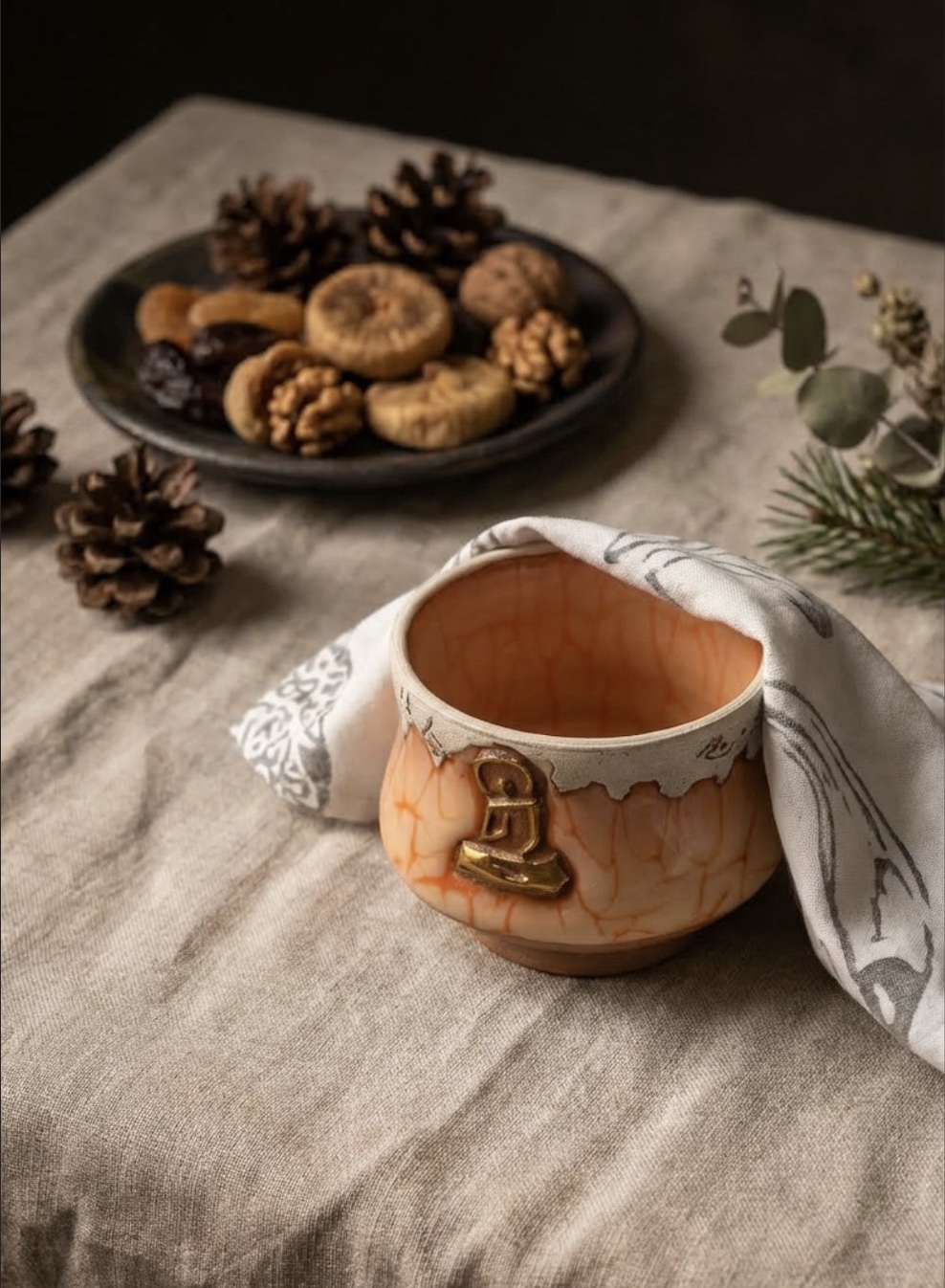
Gifts that work together:
A handmade wood-fired ceramic tea cup. Not because they need a new cup, but because a cup made by hand, fired in a kiln where no two pieces emerge the same, changes the quality of holding it. The weight, the texture, the slight irregularity of the rim — these details ask for attention in a way a machine-made mug never does. For someone whose morning ritual is already an act of quiet mindfulness, this is the difference between a routine and a ceremony. (For more on what makes a morning ritual worth protecting, see The Earthy Aesthetic: Why Texture and Imperfection Make a Better Morning Ritual.)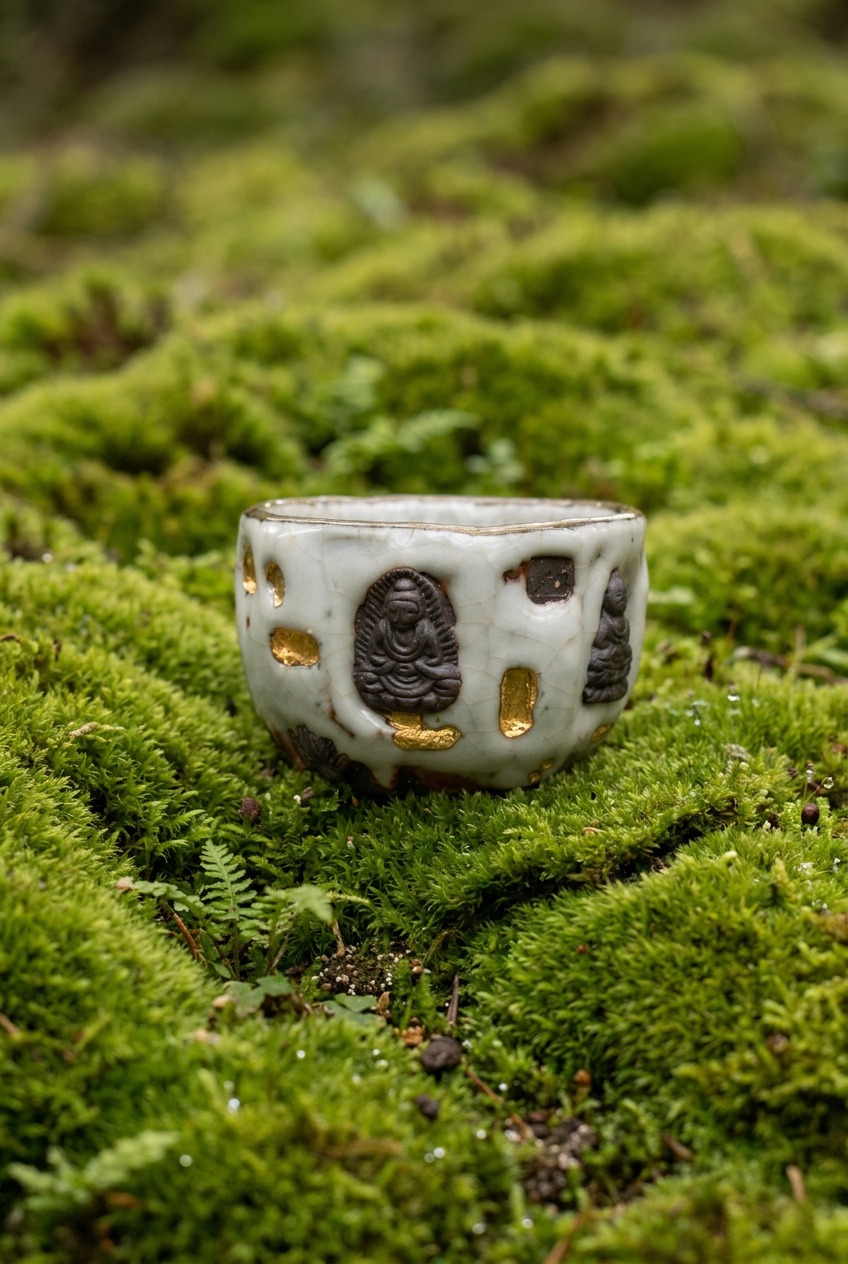
A linen tea cloth or tea mat. Unbleached, textured, functional. Something to lay the cup on, to wipe the table with, to fold carefully before leaving. It is a small thing that makes the ritual feel more considered — the kind of detail that matters to people who notice details.
A small hourglass timer — two to four minutes, for timing the steep. This is the most quietly useful gift on the list: it removes the need to check a phone, which is, for the person who protects their morning, the entire point.
What this combination says:
Those quiet hours before the world starts — they are worth taking seriously. I see that about you.
The Seeker — For the Person Exploring Something They Cannot Name
They have read about Zen without calling themselves Buddhist. They find the Stoics useful without claiming to be a philosopher. They are drawn to ideas from multiple traditions — not because they cannot commit, but because they are genuinely curious, and honest enough to admit they have not arrived anywhere yet.
What they want from a gift is not an answer. It is an object that acknowledges the question. Something that says: you do not need to belong to anything to own something that invites stillness.
Gifts that work together:
A handmade ceramic vessel with Buddhist-inspired imagery — a seated figure, a face in contemplation, a form that carries meaning without demanding belief. This is where a buddha statue in its contemporary, non-devotional form earns its place: not as an object of worship, but as a visual anchor, a reminder of a quality of mind rather than a religious affiliation. The right piece feels like it belongs in a life, not on an altar.
A quality blank journal — Leuchtturm1917 or a similar notebook with paper substantial enough to take a fountain pen. The Seeker tends to think in writing, or wants to. An empty journal is not a suggestion that they should journal — it is an acknowledgement that their inner life is worth recording.
Japanese incense from a non-religious maker — Baieido, Shoyeido, or similar. The scent of incense has been used across contemplative traditions for centuries not because it is sacred, but because smell is the sense most directly connected to memory and presence. A stick of hinoki or sandalwood changes the quality of a room without requiring explanation.
A book that asks serious questions without providing easy answers — Zen and the Art of Motorcycle Maintenance by Robert Pirsig, Meditations by Marcus Aurelius, or The Tao Te Ching in a good translation. Not a self-help book. Something that rewards re-reading.
What this combination says:
You do not need a label for what you are looking for. The looking itself is enough, and it deserves good companions.
The Overthinker — For the Person Who Cannot Stop
Their mind is always running. They are good at their work, they care about doing things well, and the cost of this is that they rarely fully arrive anywhere. They will say, occasionally, that they need to slow down — and mean it — and then not know where to start.
The gifts that work for this person are not relaxation products. They are objects and tools that make slowing down feel productive, or at least purposeful — because this person needs a reason to stop, not just permission.
Gifts that work together:
A handmade ceramic cup — specifically because it requires both hands. This is not incidental. A cup with weight and texture and slight irregularity cannot be held with one hand while scrolling a phone with the other. It insists, gently, on being the thing you are doing. For the Overthinker, this is not a small gift. It is a physical interruption to a pattern.
A structured reflection journal — The Five Minute Journal, or a similar format with guided prompts. Not a blank journal: the Overthinker in an unstructured space will spiral. What they need is a small, bounded container for thought — five minutes in the morning, three things, done. The constraint is the gift.
A white noise machine or a pair of noise-cancelling headphones with a focus-oriented playlist or app. The Overthinker is often derailed by ambient noise because their mind is already loud enough. Removing the external layer of distraction is sometimes all that is needed to find ten minutes of actual quiet.
A small living object — a moss terrarium, a single succulent, a bonsai at its earliest stage. Something that requires observation rather than action. You cannot optimise a plant. You can only watch it, occasionally water it, and notice that it is doing fine without your intervention. This is, for some people, an unexpectedly useful reminder.
What this combination says:
Slowing down is not the opposite of getting things done. It is part of how you do them well.
The Collector — For the Person With Impeccable Taste
Every object in their space was chosen. Nothing arrived by accident, nothing is kept out of obligation. They have a sensitivity — not snobbery, but genuine discernment — to the difference between things that are merely attractive and things that are truly made well. They already own the obvious things. What they do not have is something they did not know existed.
The challenge of buying for this person is significant. The gift that works is one that passes a quiet test they apply to everything: is this worthy of the eye? And ideally: could I have found this myself, easily?
Gifts that work together:
A wood-fired ceramic cup — and here the emphasis falls on uniqueness above all else. No two wood-fired pieces are identical; the fire writes its own marks into the surface, the ash settles where it chooses, and the result is an object that cannot be replicated even by the same hands in the same kiln. For the Collector, this is the decisive quality. It is not a buddha sculpture in the conventional sense — it is a piece of Buddhist-inspired ceramic art that belongs in a curated space, that rewards close looking, and that no one else owns in quite this form.
A handmade brass or copper tea scoop — the kind made by a single craftsperson, with visible tool marks and slight asymmetry. The Collector notices the difference between an object produced to a standard and one produced by a person. A good tea scoop is both useful and beautiful, which is the combination this person values most.
A natural stone tray or dark wood tea board — unfinished, or finished simply. Something to arrange a few objects on. The Collector understands that curation requires a surface, and the right tray elevates everything placed on it without competing with it.
A limited-edition candle from an artisan maker — Brooklyn Candle Studio, Apothecary Co., or a similarly considered brand. The scent should be unusual without being aggressive: cedarwood and moss, black tea, hinoki. Something they would not have bought for themselves, but will immediately understand why you did.
What this combination says:
I found something worthy of your eye. And no one else has the exact same one.
A Note on Choosing Between Them
Most people are a combination of more than one type. The Collector might also be a Seeker; the Overthinker might have The Quiet One’s morning ritual underneath all that noise. When in doubt, lead with the quality you most associate with them — the thing you would say if asked to describe them in a sentence — and build from there. All four types respond well to mindfulness gifts that carry a reason: objects chosen because of who the person is, not just what they might use. (If you're still deciding between a handmade cup and something else, Mindfulness Gifts for the Spiritual but Not Religious offers a different angle on the same question.)
These combinations also work as mindfulness gift box additions: you do not need to give all four items at once. A ceramic cup and a single tea, or a journal and a book, is already a considered gift. The point is not completeness. It is coherence — the sense that someone thought about who this person actually is.
Spiritual birthday gift ideas, anniversary gifts, housewarming presents — the categories above hold across occasions. What changes is not the type of gift, but the note you write with it. That is where the meaning lands.
FAQ
Are these gifts appropriate for someone who is not spiritual?
Yes. The four types described here are defined by personality and sensibility, not by any declared spiritual practice. The Quiet One may not use the word spiritual at all — they simply value their mornings. The Collector may have no interest in contemplation and every interest in objects made with exceptional craft. The gifts work because they suit the person, not the label.
What makes a handmade ceramic cup a better gift than a designed one?
A designed cup — however beautiful — is repeatable. It was produced to a specification, and thousands of identical versions exist. A handmade wood-fired cup is the outcome of a specific fire on a specific day, shaped by a specific pair of hands. The marks on its surface cannot be planned or replicated. This singularity is not merely aesthetic: it changes the quality of the relationship between the object and the person who uses it. For the right recipient — The Quiet One, The Collector, anyone who notices how things are made — this difference is felt every time they pick it up.
How do I know which type someone is?
Think about how they talk about their time, not their interests. The Quiet One protects their mornings. The Seeker recommends books. The Overthinker talks about needing to slow down. The Collector notices what is on other people's shelves. You probably already know — you have just not had a framework to organise it until now.
A Final Thought
The best gifts for spiritual seekers — and for everyone on this list — are not the most expensive or the most elaborate. They are the ones that communicate something true. That you paid attention. That you thought about who this person actually is, not just what they might use.
Unique Buddhist gifts for practitioners, zen gifts for her or for him, objects that invite stillness without requiring belief — these things exist. They are just harder to find than what fills the first page of a search result. The fact that you are looking is already most of the gift.
Related Articles:
Reference:1. https://www.quora.com/Whats-a-word-for-one-who-seeks-knowledge2. https://medium.com/@ninahopewrites/the-morning-ritual-that-helped-me-quiet-my-anxiety-and-increase-productivity-b5678c4eb9c3


