Table of Contents
1. The Problem With Most Decorating Advice
Most decorating advice treats a room like a problem to be solved: buy these things, arrange them this way, and the result will be a space that looks calm. The objects are interchangeable. What matters is the aesthetic outcome — the photograph, the first impression.
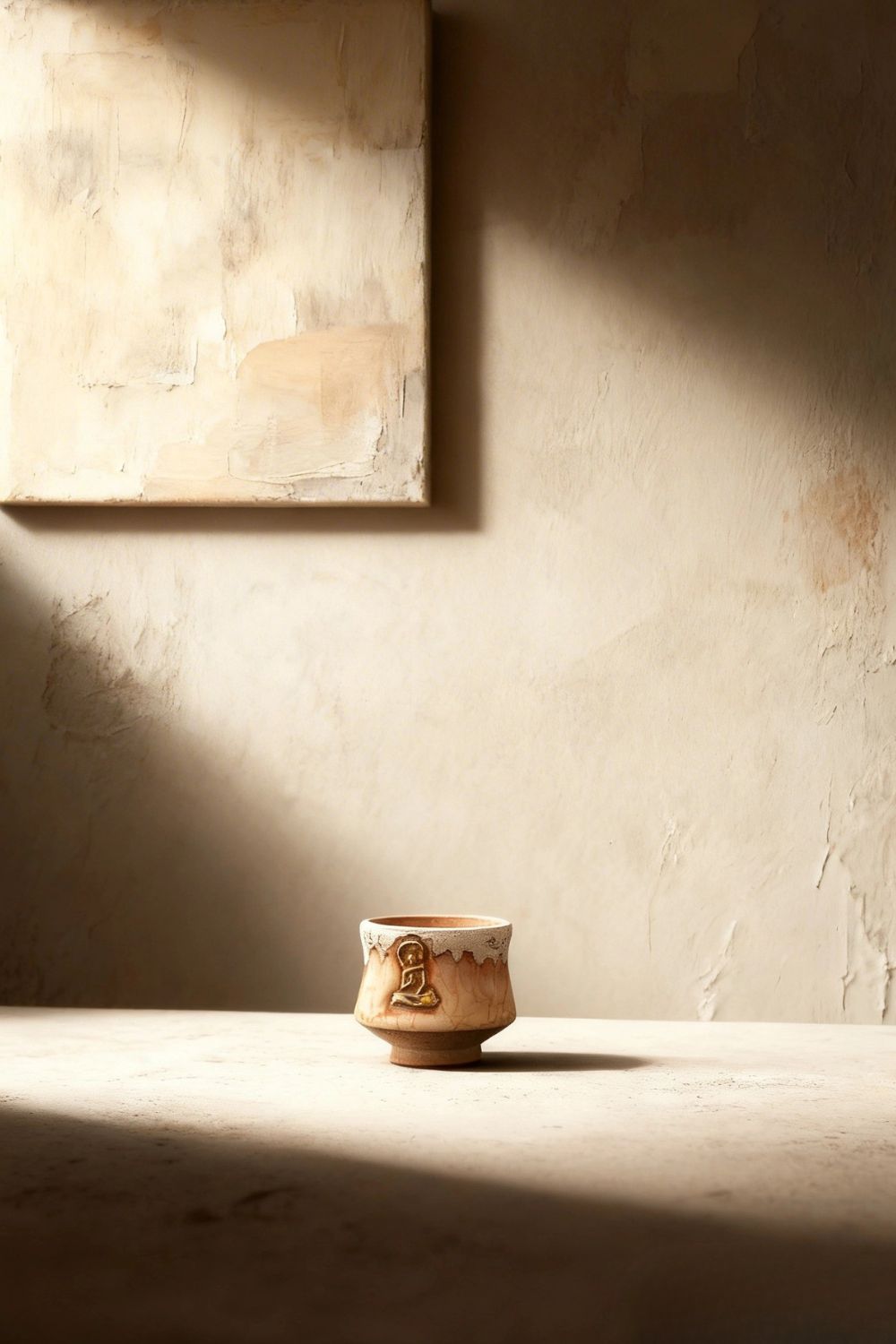
The difficulty is that this approach produces spaces that feel finished but not inhabited. Everything coordinates. Nothing has history. You live in a room that could belong to anyone.
Zen home decor, properly understood, is the opposite of this. It is not a style applied to a room from outside. It is the result of choosing objects slowly, keeping fewer things, and allowing what you keep to accumulate meaning over time. The goal is not a room that looks peaceful. It is a room that actually is.
2. What Zen Home Decor Actually Means
The word zen is used loosely in the context of interiors — often as a synonym for minimal, neutral, or clutter-free. These qualities are related to zen aesthetics, but they are not the core of it.
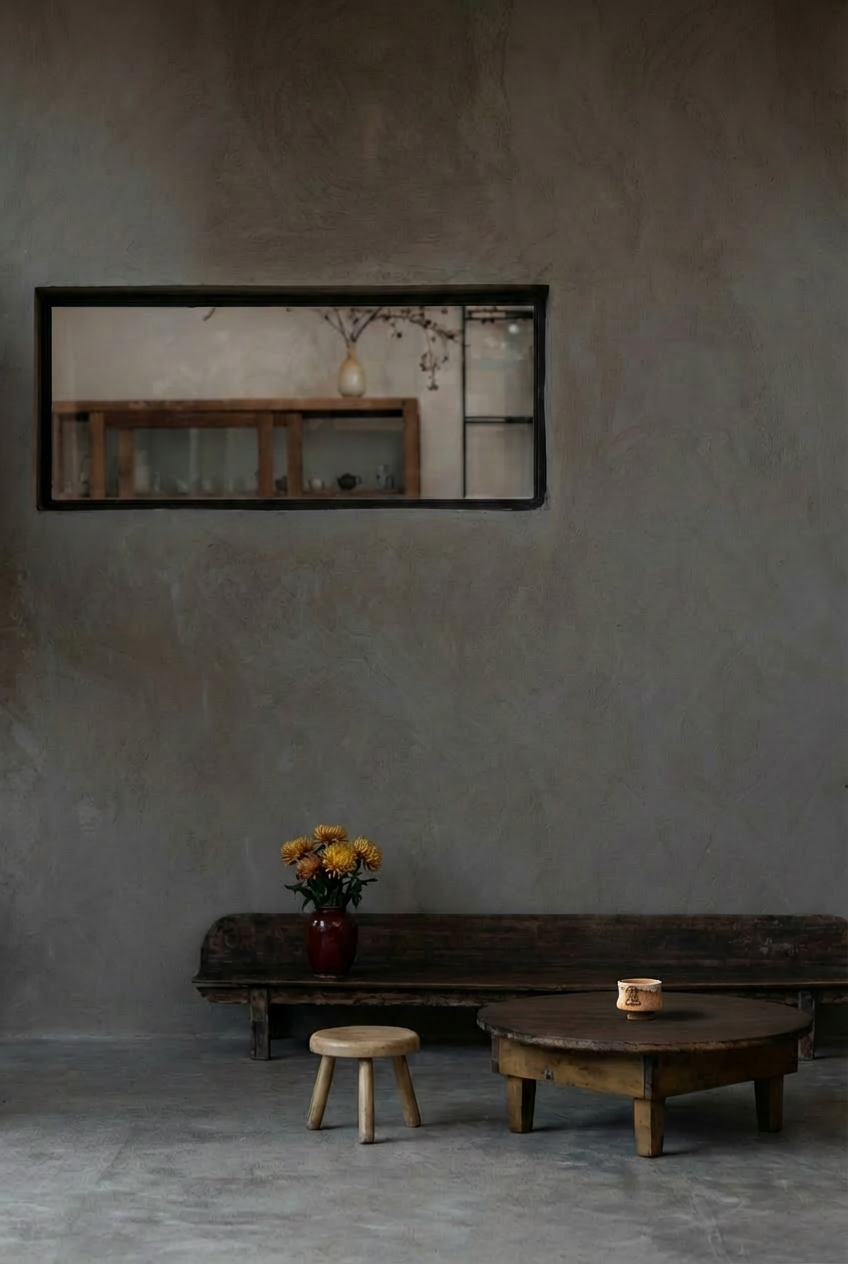
At its root, this aesthetic is concerned with attention. With the quality of presence that a space either supports or undermines. A room designed in this spirit does not demand to be noticed — it recedes, and in receding, it allows the person inside it to arrive more fully.
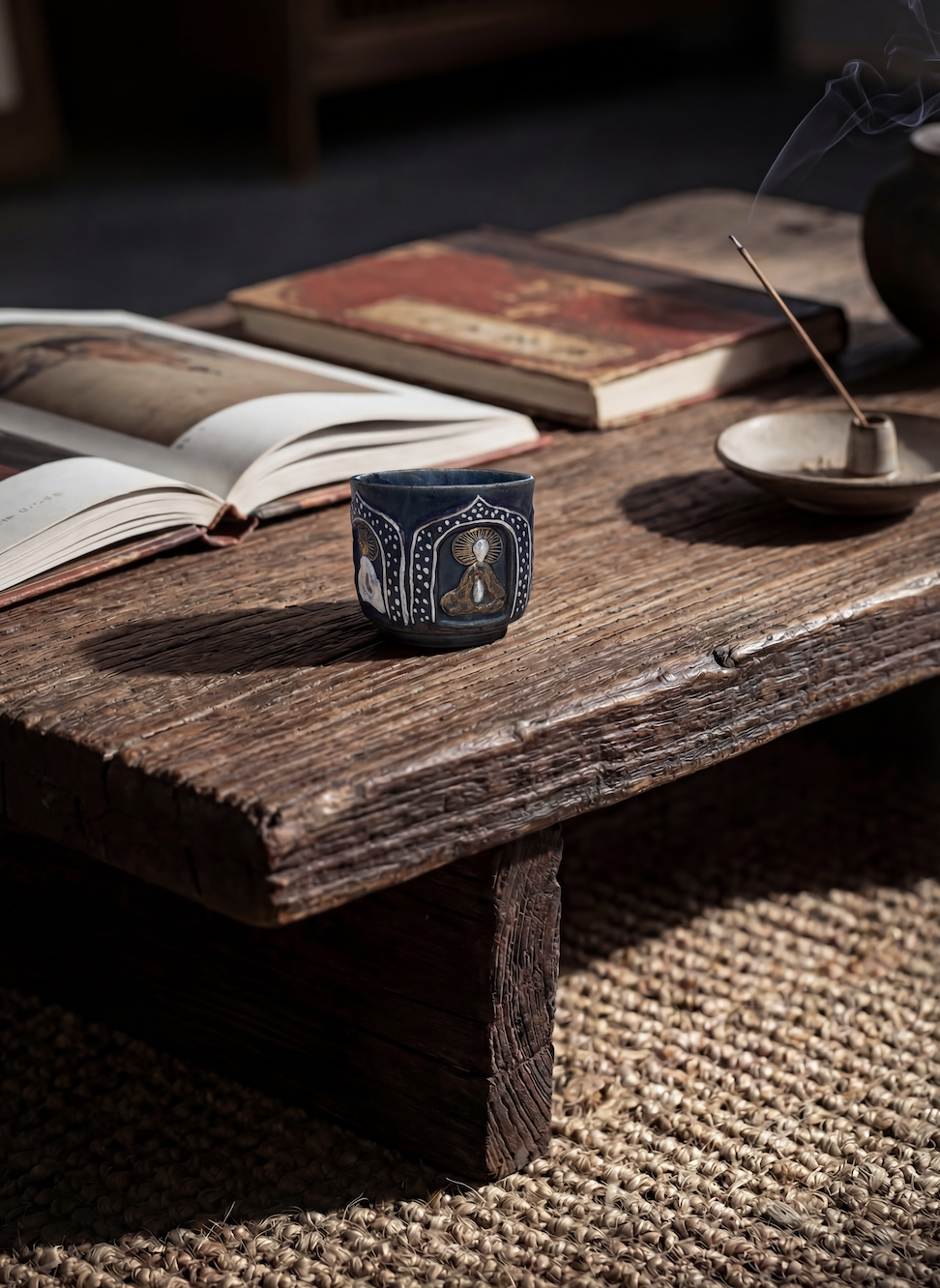
This has practical implications. It means choosing objects that reward close looking rather than objects that make an immediate statement. It means preferring imperfection — the irregular edge, the surface marked by its making — over the seamless finish. It means understanding that negative space is not empty space: it is the interval that allows each object to be seen.
In this sense, this approach to interior design overlaps significantly with the wabi-sabi aesthetic, with Japandi design principles, and with the broader Scandinavian-Japanese fusion that has shaped contemporary minimalist interiors. What unites them is a preference for the handmade over the mass-produced, the considered over the convenient, the durable over the fashionable.
3. Why Handmade Objects Age Differently
A mass-produced object has a fixed relationship with time. It arrives at peak condition and deteriorates from there — fading, chipping, losing whatever quality it had when new. Its aging is a diminishment.
A handmade object, particularly one made from natural materials and fired at high temperatures, ages in a different direction. Wood-fired pottery is the clearest example of this. The clay body, once vitrified in a kiln, becomes a stable material that does not degrade with use — it develops. The surface absorbs the oils of repeated handling. In unglazed sections, the pores take in trace compounds from whatever the vessel holds. The object, used consistently over months and years, becomes more itself.
Two different relationships with time:
|
Mass-produced object |
Handmade, high-fired object |
| Arrives at |
Peak condition |
A starting point |
| Over time |
Fades, chips, deteriorates |
Absorbs oils, develops patina, becomes more itself |
| Direction |
Diminishment |
Accumulation |
This is not nostalgia or sentimentality. It is a material fact about how certain objects behave. And it is the reason that pottery decor — pieces chosen to live in a space and be handled regularly — can carry a quality of presence that manufactured objects simply cannot accumulate. (This accumulation of meaning through damage and repair is explored directly in [The Beauty of the Broken: What a Golden Scar Can Teach Us About Resilience].)
The same logic applies to other handmade materials: patinated brass, worn linen, aged wood. What they share is a responsiveness to time that synthetic or mass-produced materials lack. They record the life lived around them. Over years, this becomes visible.
4. The Objects Worth Choosing
Not all handmade objects age well, and not all of them suit a zen-influenced interior. The ones that do tend to share a few qualities.
What the objects that age well have in common:
| Quality |
What it looks like |
| Natural materials |
Clay, stone, unfinished wood, raw linen — interact with light and touch differently than synthetic materials |
| Quiet |
Visual energy concentrated, not broadcast — rewards noticing rather than demanding it |
| Useful |
Something used daily (a cup, a vessel) accumulates meaning that purely decorative objects cannot |
They are made from natural materials — clay, stone, unfinished wood, raw linen — that interact with light and touch in ways that synthetic materials do not. They have been shaped by a process that left visible evidence: the marks of hands, the effects of fire, the small asymmetries that distinguish making from manufacturing. (On what the kiln actually does to make each piece unrepeatable, see [The Kiln's Alchemy: Flambé Glaze and the Miracle of Rebirth].)
They are quiet. This does not mean they are plain — some of the most arresting modern zen interior accents are pieces with complex surfaces and subtle figurative elements. But their visual energy is concentrated rather than broadcast. They do not shout. They wait to be noticed, and reward the noticing.
They are useful, or at least usable. The zen aesthetic has always been suspicious of pure decoration — objects that exist only to be looked at, that play no role in daily life. A cup that is used every morning has a different relationship with its space than a sculpture placed on a shelf and never touched. Both have value, but the used object accumulates a kind of meaning the purely decorative one cannot.
Within this, minimalist home accents made from wood-fired or hand-built ceramics occupy a particularly good position: small enough not to dominate a space, substantial enough to anchor it, and versatile enough to function as vessels, as objects of contemplation, or as both simultaneously.
5. Two Pieces That Earn Their Place
The following two pieces illustrate what it means for an object to be worth living with over time — not just to look at once, but to return to.
The Duality Insight — For Spaces That Hold Contradiction
Made from rustic clay and fired at high temperatures, The Duality Insight carries two faces on a single surface — one in shadow, one emerging into light. The contrast is deliberate: not decorative symmetry, but a reference to the zen understanding that stillness and movement, clarity and obscurity, are not opposites but aspects of the same thing.
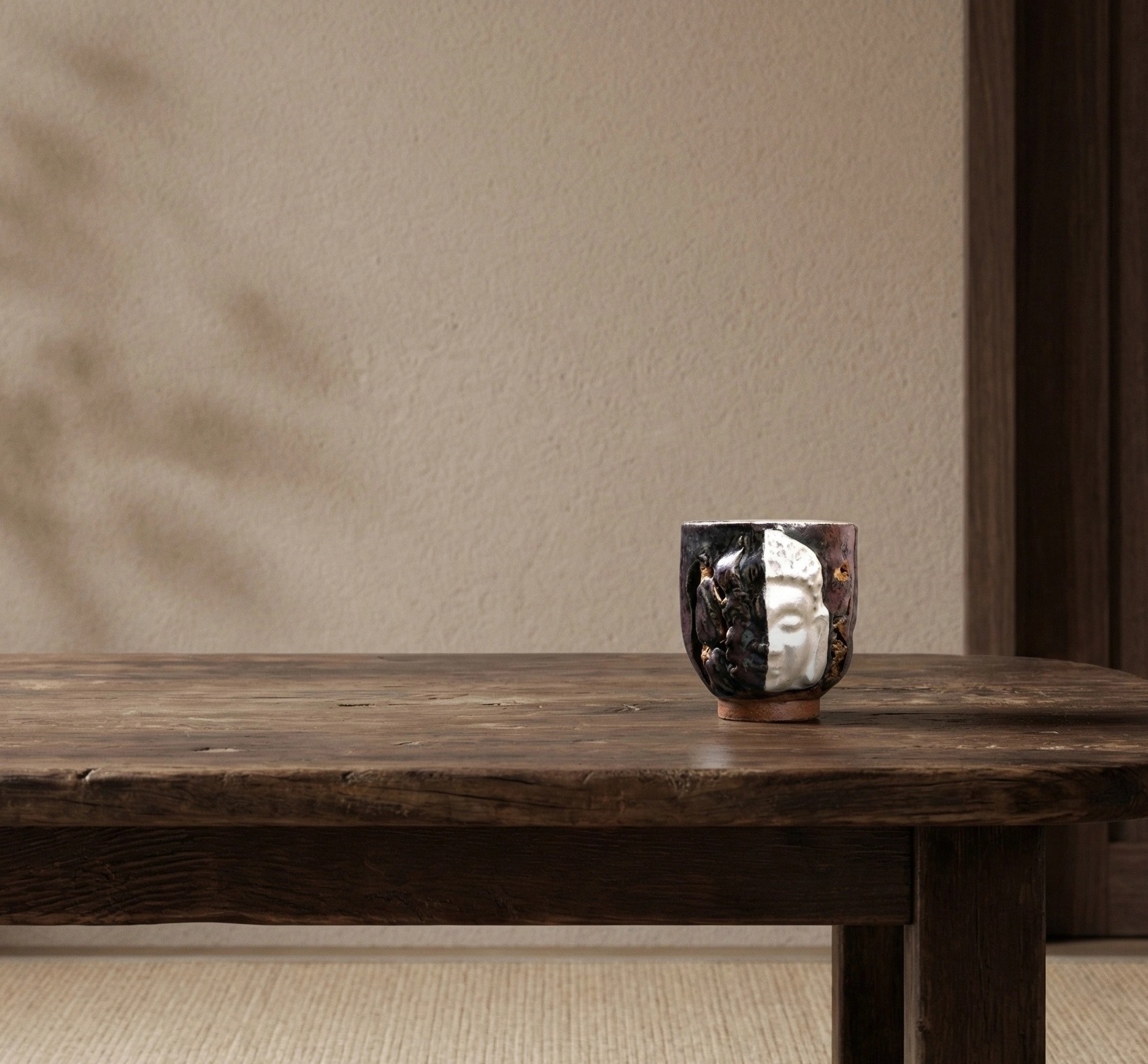
The Duality Insight: one face in shadow, one in light — the contrast built into the surface, not imposed on it. As pottery decor, it asks nothing of the room except a surface to rest on and enough quiet to be noticed.
At 6.8 cm wide and 7.4 cm tall, it sits comfortably on a desk or shelf without requiring a dedicated space. Its dark surface — iron-rich clay that fires to a dense, stone-like quality — makes it one of those Japandi style accessories that works equally well in a spare Scandinavian interior or a warmer, more textural Japanese-influenced space. The gold accents catch light differently depending on the time of day, which means the piece is not static: it changes with the room.
This is a piece that functions as both pottery decor and a minimalist Buddha statue for living room settings — present without being pious, contemplative without requiring explanation.
Check the pottery here
The Abstract Ascent — For Spaces That Value Upward Movement
The Abstract Ascent is fired in Shino — one of the oldest and most unpredictable of Japanese ceramic traditions, known for its orange-blush surfaces and the way the clay body retains the marks of the fire. The result here is a piece that appears almost geological: its crackled orange glaze interrupted by a seated gold figure that seems less placed than arrived.
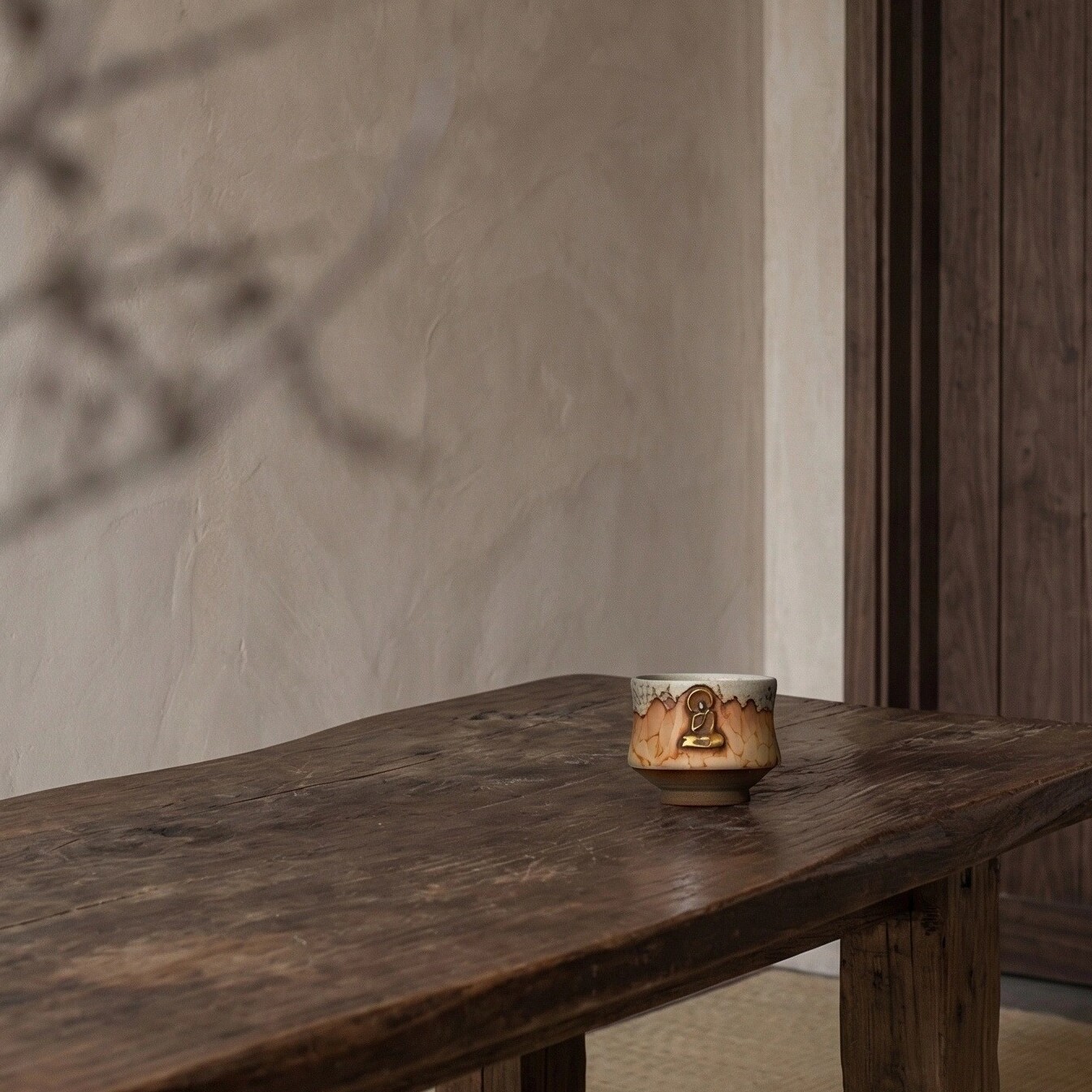
The Abstract Ascent on an aged wood table. Shino-fired pottery decor does not announce itself — it settles into a space and becomes part of how the room feels over time. This is zen home decor in the most literal sense: one object, one surface, nothing competing for attention.
Its surface is one of those modern zen interior accents that cannot be designed in advance — it is the outcome of specific conditions in a specific kiln on a specific day, unrepeatable. This is not a detail visible in a photograph. It becomes apparent when you hold the piece, or when you have lived with it long enough to notice how its surface changes under different light.
Both pieces are sized for daily use as tea or coffee vessels, which is part of what makes them worth living with: they are not set apart from ordinary life. They participate in it.
Check the pottery here
6. Frequently Asked Questions
How do I incorporate wood-fired pottery into a minimalist interior without it feeling cluttered?
The key is to treat each piece as the only object in its zone of attention. A single wood-fired cup on a cleared desk, a single ceramic vessel on an otherwise empty shelf — these arrangements allow the object to be seen rather than competing for notice. The mistake most people make is adding too many things at once. In a minimalist interior, one well-chosen piece of pottery decor does more work than five mediocre ones. Start with one, live with it for a month, and only add another when the space asks for it.
Does the meaning of an object really change with use, or is that just sentimentality?
It is both, and both matter. There is a material dimension: a wood-fired ceramic cup used daily for a year will look and feel different from one that has never been used. The clay body absorbs trace compounds, the surface develops micro-patina, the piece becomes physically distinct from an unused version of itself. But there is also a relational dimension — the associations the object accumulates through repeated use, the way it becomes connected to specific times of day, specific states of mind. Neither of these is mere sentimentality. Both are real changes in the object's relationship with the person who uses it.
What is the difference between Japandi style and a zen-influenced interior?
Japandi is a design aesthetic — a specific fusion of Japanese and Scandinavian visual languages, characterised by natural materials, muted palettes, functional forms, and a shared preference for quality over quantity. Zen home decor is broader and less defined by visual rules: it is concerned with the quality of attention a space supports, which can be achieved through various aesthetic approaches. Japandi style accessories often embody zen principles, but a zen-influenced interior is not limited to the Japandi palette. A space can be warm, dark, and textural — quite different from the light-filled Japandi ideal — and still support the quality of presence that this sensibility values.
A Final Thought
The objects that last in a space — not physically, but in terms of their claim on your attention — are almost never the ones chosen quickly. They are the ones chosen because something about them was worth returning to: a surface that had more in it than first appeared, a form that held up under the hundredth look as well as the first.
This is what zen home decor, at its best, produces: not a room that photographs well, but a room that continues to reward living in. The objects are not the point. The quality of life inside the space is. But the right objects — made slowly, chosen carefully, used consistently — make that quality more available, more daily, more real.
Related Articles:
Reference:
-
https://www.linkedin.com/pulse/rise-japandi-style-minimalist-zen-meets-scandinavian-hygge-qadof
-
https://anamariadesigns.com/blog/zen-and-japandi-interior-design-how-to-create-natural-classy-calm-in-your-home
-
https://blog.cortfurnitureoutlet.com/decorate/zen-vs-japandi/


