Contents
1. The Real Problem with Gifting Someone Who Has Everything
2. The Category That Solves It: Objects That Carry Weight
3. The Wabi-Sabi Aesthetic and Why It Makes the Best Gifts
4. Sustainable Luxury: The Alternative to Fast Gifting
5. Objects That Become Heirlooms: The Gift That Compounds
6. Who Specifically This Kind of Gift Is For
The problem with finding gifts for someone who has everything is not, in the end, a shortage of options. Department stores and curated gift guides are full of options. The problem is categorical: most available gifts operate within a logic of novelty that has already stopped working for people who genuinely have everything they need. A new object that joins a collection of objects, appreciated briefly and then absorbed into the background — this is the experience most people are trying to avoid giving, and most givers are trying to avoid creating.
The solution is not a better search for the right novelty. It is a different category of object entirely: one whose value is not in newness, not in price, and not in the completeness of its function at the moment of unwrapping. The category of object that works for gifts for someone who has everything is the one that carries weight — in both the literal and figurative senses — and that continues to offer something different months and years after it arrives.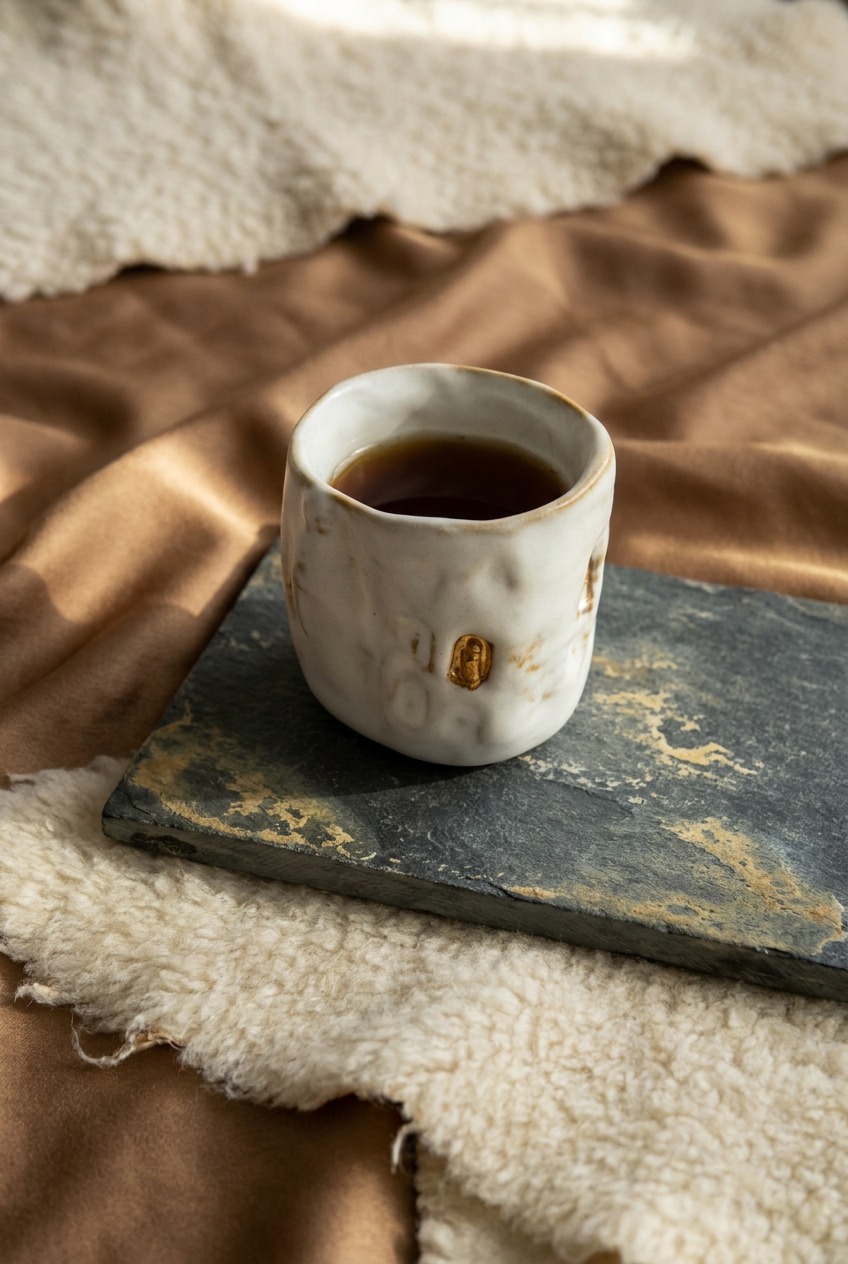
For the one who has it all, this wabi sabi ceramic cup is a spiritual gift that marries sustainable luxury with timeless charm. A unique heirloom for tea lovers, it’s the perfect mothers day gift with weight and soul.
1. The Real Problem with Gifting Someone Who Has Everything
Research published in Humanities and Social Sciences Communications on the psychology of meaningful gift-giving found that the most resonant gifts are those that create meaningful memories and strengthen social connection — not through monetary value but through the evidence they provide of genuine understanding of the recipient’s personality, values, and current life circumstances. Psychology Today’s analysis of the power of gifting confirms that the expensive, last-minute gift creates less lasting joy than a carefully chosen object that speaks to someone’s current life journey — because recipients value the thought process and personal connection behind gifts far more than their monetary value.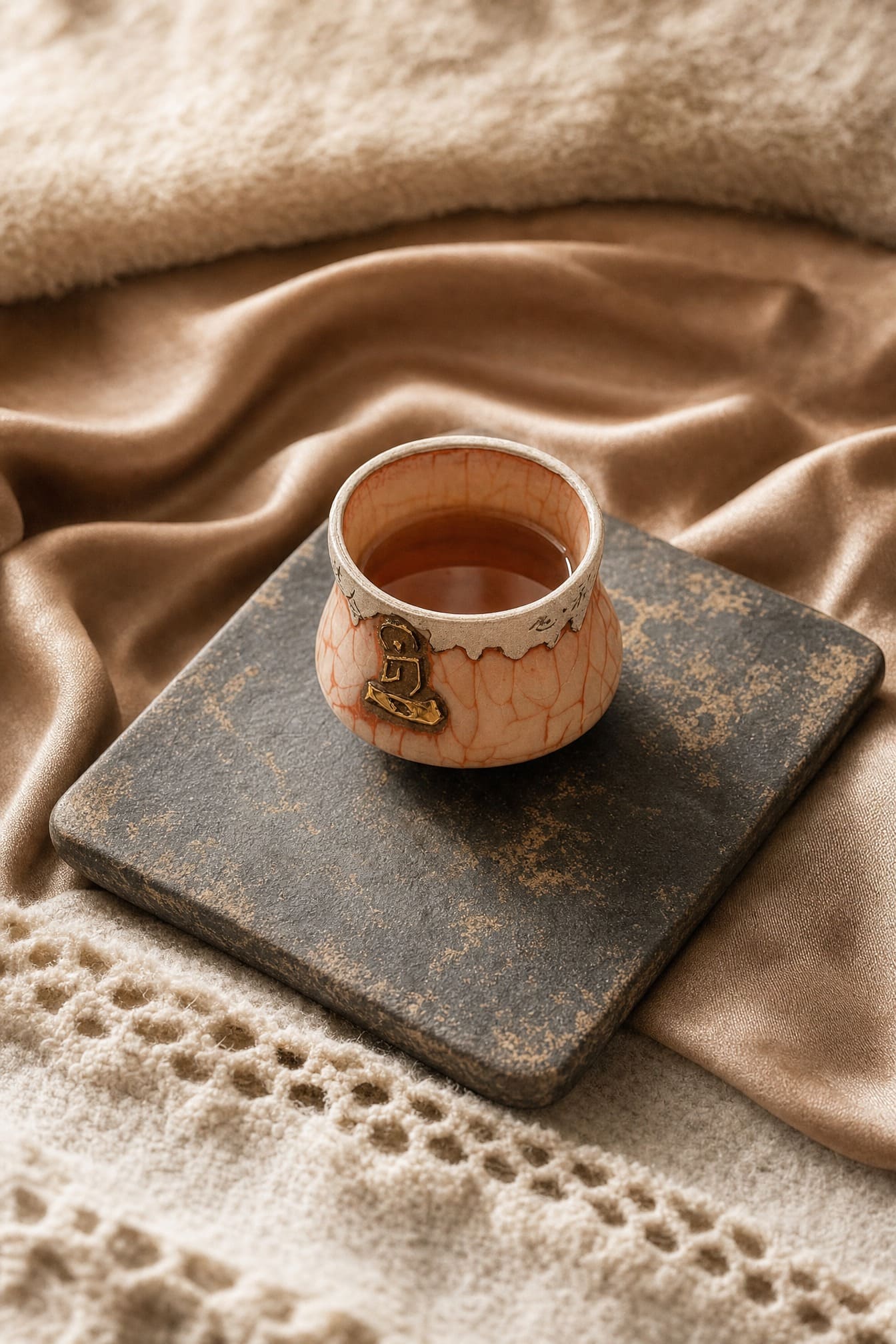
Elevate your gifting with The Abstract Ascent—a piece of wood-fired ceramics that embodies the Wabi sabi aesthetic, where the unique glaze effects from wood firing tell a story of craftsmanship.
For someone who has everything in the material sense — who has accumulated the objects, the experiences, the comforts they want — the question is not what they do not yet own but what they do not yet have enough of. PMC-published research on object attachment and sentimental value found that objects with strong sentimental value are specifically those that provide comfort and emotional security, remind the recipient of meaningful relationships, and express what is unique about them as an individual. These qualities are not properties of expensive objects; they are properties of chosen objects — selected with genuine understanding of who the recipient is.
The gift that solves the gifts for someone who has everything problem is the one that communicates: I know who you are, and I chose this specifically for that reason. This communication is not primarily conveyed by price. It is conveyed by specificity — by the gift being precisely the right thing for precisely this person, at precisely this moment in their life. For someone with a mindfulness practice, a contemplative orientation, a sense of their own aesthetic — the right gift is one that meets them there.
Discover The Stone Sanctuary—a wood-fired ceramic cup that merges the Wabi sabi charm of imperfection with the soulful depth of wood-fired glazes.
2. The Category That Solves It: Objects That Carry Weight
In the gifting context, gifts with weight refers to a double quality: physical weight that is noticed at the moment of holding, and relational weight that accumulates across time. Both matter, and they are related. Physical weight — the specific density of a hand-formed ceramic cup made from mineral-rich clay, the heft of an object that was not designed to be as light as possible — creates a particular quality of presence in the hand. It communicates, without words, that the object is substantial: that something went into making it, and that what went into making it has not been refined away in the interests of efficiency.
The relational weight of an object develops differently from its physical weight, but the two reinforce each other. An object that has physical presence — that is noticed each time it is picked up, that registers as specific and real — is more likely to accumulate the relational weight of repeated encounter over time. Research on attachment objects published in Tandfonline found that adult attachment objects typically function first as reminders of significant people or relationships, and that their meaning develops and deepens through repeated use rather than diminishing with familiarity. This is the opposite of novelty: it is an object whose return is anticipated rather than its acquisition.
For recipients with a spiritual gift ideas orientation — those who maintain a meditation practice, a yoga discipline, a morning ritual, a deliberate approach to stillness — objects with physical weight serve an additional function: they serve as what psychologists call practice anchors, physical cues that activate the quality of awareness associated with the practice they accompany. A cup held every morning before the day begins, whose mineral surface is noticed each time it is lifted, is a spiritual gift ideas object in the most practical sense: it is present at the practice, every day, becoming more familiar and more meaningful with each encounter. As our guide to mindfulness gifts for the spiritual but not religious explores, the most useful objects for a contemplative practice are those with enough physical presence and surface complexity to anchor attention without demanding it.
3. The Wabi-Sabi Aesthetic and Why It Makes the Best Gifts
As Psychology Today’s analysis of the wabi-sabi philosophy explains, the wabi sabi aesthetic is a Japanese concept centred on the appreciation of imperfection, impermanence, and incompleteness — the recognition that flaws, asymmetry, and the visible marks of making and use are sources of beauty rather than evidence of failure. The most classic expression of this in material culture is kintsugi, the practice of repairing broken ceramics with gold lacquer, making the repair visible rather than hiding it. The repaired object is not diminished by its history of breaking and being mended — it is made more interesting by it.
The Conversation’s psychological analysis of wabi-sabi notes that the ideas behind wabi-sabi reflect several well-established principles in psychology — including self-compassion, acceptance of change, and the release of perfectionism. Research consistently shows that people who respond to imperfection with understanding rather than harsh self-criticism report lower anxiety, greater wellbeing, and stronger resilience. The wabi-sabi object — the handmade cup with visible mineral texture, the ceramic piece that shows the marks of its firing — is a physical instantiation of this psychological orientation: an object that finds its value precisely in the evidence of its material honesty, rather than in the concealment of its making. As our guide to the wabi-sabi sanctuary explores, the most powerful objects for a space oriented toward contemplation and simplicity are those that communicate honestly what they are made of and how they were made.
Positive Psychology’s overview of the wabi-sabi lifestyle traces the aesthetic’s origins to the Japanese tea ceremony — specifically to the tea master Murata Shukō’s 15th-century letter urging a return to the simple and imperfect over the ornate and imported. The objects he advocated for were rustic tea bowls that embraced their own material nature. This is the direct ancestor of the contemporary wabi sabi aesthetic as it appears in home design and gifting: an aesthetic that chooses objects made with genuine craft, from natural materials, that show the marks of their making — not despite these qualities, but because of them.
For gifting purposes, this resolves the gifts for someone who has everything problem in a specific way: a wabi-sabi object is, by definition, something the recipient does not already have and cannot acquire from a mass-production catalogue. Its value is not in its category — ‘a tea cup’ or ‘a ceramic piece’ — but in its specific material particularity: the specific clay body, the specific firing, the specific marks of that kiln and that maker, all of which are unrepeatable. No two genuinely handmade pieces in the wabi sabi aesthetic are identical. This is not a limitation. It is the point.
4. Sustainable Luxury: The Alternative to Fast Gifting
Wikipedia’s entry on wabi-sabi notes that in contemporary Japan, wabi-sabi is often summarised as “wisdom in natural simplicity.” In design contexts, it refers to the acceptance of objects that show age, use, and imperfection — objects that improve with use rather than degrade with it. This is the foundational principle of what is now described as sustainable luxury: the rejection of fast-consumption gifting in favour of objects that are made well enough, from materials honest enough, to be worth keeping indefinitely.
The logic of sustainable luxury inverts the conventional premium gifting equation. Conventional premium gifts compete on novelty, brand recognition, and the momentary experience of receiving something expensive. Sustainable luxury competes on something different: the experience of using the same object for years, watching it change, noticing its presence every day, and finding that it means more rather than less as time passes. This is not a budget argument — it is a durability argument. An object made with genuine craft from honest materials will outlast, in every meaningful sense, a more expensive object whose value is concentrated in its newness.
For the recipient who has everything, sustainable luxury is often the only category that can surprise them. They have the expensive new things. What they may not have is an object that grows with them — that looks and functions differently at year five than it did at year one, that has absorbed the oils of their hands, that carries in its surface the accumulated record of being used by this particular person in this particular way. As our guide to why handmade objects become more meaningful over time argues, the objects that hold their value in daily life most durably are not those that are preserved unchanged — they are those that are allowed to develop, season, and become more specifically themselves through use.
5. Objects That Become Heirlooms: The Gift That Compounds
The concept of unique heirloom gifts rests on a specific quality: an object made with enough care, from materials of enough integrity, to survive not just years of daily use but decades — and to accumulate meaning rather than wear through that survival. Heirlooms are not typically the most expensive objects in a household. They are the objects with the most specific history: this cup was my grandmother’s, used every morning for thirty years, and the surface shows it. The surface shows it is precisely the point.
A handmade ceramic cup from mineral-rich clay develops a patina across use: the tea compounds it has held accumulate in the pores of the clay, deepening its colour, enriching its interaction with subsequent brews, making the surface more complex than it was when new. As our detailed guide to tea cup care and patina development explains, this is not degradation — it is the cup becoming more specifically itself through use. At year one, the cup is a gift. At year ten, it is a companion. At year thirty, it is — in the most genuine sense — a piece of the recipient’s life. This is the trajectory of unique heirloom gifts: not objects that are preserved unchanged, but objects that grow alongside the person who uses them.
The difference, in three questions:
| Most gifts | A handmade wood-fired cup | |
|---|---|---|
| Discoverable | Yes — searchable, comparable | No — exists because someone made it |
| Available | Multiple options, various prices | One of a kind |
| What it says | "I bought something" | "I looked for something that couldn't be found" |
The gifting implication is significant. When you give someone an object capable of becoming an heirloom, you are not giving them something for today — you are giving them something for the rest of their relationship with daily life. The cup that will hold their morning in ten years. The object their daughter might eventually ask about. This is the gift that compounds: not in the financial sense, but in the sense that it accrues meaning across time in a way that novelty gifts, by definition, cannot.
6. Who Specifically This Kind of Gift Is For
Four kinds of people this gift tends to suit:
| Type of person | What they value | Why this gift fits |
|---|---|---|
| Values slowness | Protects their quiet morning ritual | An object that participates in the ritual, not just serves it |
| Spiritually curious, not religious | Drawn to meaning without dogma | Imagery that speaks to stillness, no belief system required |
| Already has everything | Notices the difference between attractive and considered | A handmade piece can't be stumbled upon by accident |
| Drinks tea/coffee with intention | Has strong opinions about their cup | The vessel changes the experience itself |
For the person with a contemplative or mindfulness practice
Yoga practitioners, meditators, people with morning rituals they protect — these are recipients for whom the right object is one that accompanies and anchors their practice. A spiritual gift ideas object for this person is not symbolic in a decorative sense: it is a physical tool for presence, present at the specific moment of the day when they are most likely to be briefly still. A handmade cup with Buddhist imagery pressed into its surface occupies exactly this position — it is held at the morning moment, warm in the hands, specific enough in its surface to invite rather than demand attention. Our guide to meaningful gifts for people at different points in their spiritual and mindfulness journey explores the specific differences between recipients whose practice is devotional, philosophical, aesthetic, or simply quietude-seeking — and how to choose accordingly.
Unique mothers day gifts for tea drinkers and women who have built their own rituals
Mother’s Day sits at the intersection of two gifting problems: the difficulty of finding something genuinely new for someone who has accumulated decades of gifts, and the particular challenge of honouring someone whose taste and preferences are both strongly developed and highly specific. Unique mothers day gifts for tea drinkers need to solve both problems simultaneously — something she has not seen, that speaks directly to the way she actually lives her life.
For a mother who drinks tea, who has a morning ritual, who appreciates objects of genuine craft over objects of brand recognition — a handmade cup from mineral-rich clay with Buddhist imagery is precisely the intersection of wabi sabi aesthetic and daily function that makes a gift feel chosen rather than selected. It is not a generic tea gift. It is an object with enough specific material character — visible mineral texture, fire marks, the specific warmth of dense clay — to be immediately noticeable as something different from what she already owns. And because it is made from materials that develop with use, it will look and feel meaningfully different at the end of the year than it does on the morning it arrives. As our guide to self care gifts and objects that compound over time explains, the most resonant gifts for women who have built their own rituals are those that enter the ritual rather than interrupting it.
For the person who values sustainability and material honesty
For the recipient who thinks carefully about what they own, where it came from, and what happens to it — the sustainable luxury argument is the most directly relevant. A mass-produced gift, however expensive, participates in a system that the thoughtful recipient already knows they want less of. A handmade object from a workshop that produces each piece individually, from natural clay bodies, fired in kilns that leave their marks on the surface — this is the gifts with weight argument made concrete: an object that has weight because something real went into making it, by specific hands, once, unreproducibly. For this recipient, the gift’s provenance is part of its value. The handmade object is the gift.
What actually makes a gift meaningful for gifts for someone who has everything?
The research on gift psychology consistently points to the same answer: the most resonant gifts are those that demonstrate genuine understanding of the recipient’s personality, values, and current life circumstances. Psychology Today’s analysis of the power of gifting notes that recipients value the thought process and personal connection behind a gift far more than its monetary value. For someone who has everything, this means the gift that works is not the most expensive thing in their preferred category — it is the most specific thing for who they are right now. A handmade object that speaks directly to their aesthetic, their practice, their relationship with daily life, will carry more meaning than a more expensive object chosen primarily for its price.
How is a handmade ceramic cup an example of sustainable luxury?
Sustainable luxury is the logic of owning things that are made well enough to be worth keeping indefinitely — that do not need to be replaced because novelty has worn off, and whose value increases rather than decreases with use. A handmade cup from mineral-rich clay fired at high temperature is, by its material nature, built to last. The clay body becomes denser and more developed with use as tea compounds accumulate in the pores. The surface develops character that a new cup does not have. The object that was a gift is, at decade’s end, a companion — specific to its owner in a way that no catalogue-purchased object can be. This is the meaning of sustainable luxury in the gifting context: not expensive, but irreplaceable. Not preserved unchanged, but developed.
Why is a handmade object one of the best unique heirloom gifts?
Heirlooms are objects with specific history — that carry, in their surface and their associations, the record of having been used and valued by a particular person over a particular span of time. A handmade ceramic cup made from mineral-rich clay develops a patina across use: its inner surface deepens in colour as tea compounds accumulate, its exterior gains the warmth of the hands that have held it, its specific character becomes more legible over years. This is not degradation — it is the object becoming more specifically itself. At the end of a decade of daily use, it looks and functions differently than it did when new, and carries in its surface the record of those years. This is why it qualifies as a unique heirloom gifts object: not because it is fragile and must be protected, but because it is durable enough to outlast novelty and develop into something genuinely irreplaceable.
A Final Note
The wabi sabi aesthetic offers a different theory of gifting than the one most of us were raised with. Where conventional gifting prizes newness, the wabi-sabi gift prizes specificity. Where conventional gifting concentrates value in the moment of unwrapping, the wabi-sabi gift distributes its value across years of daily encounter. Where conventional gifting answers the question “what do they not yet have?”, the wabi-sabi gift answers a different question: “what would be worth returning to, every morning, for the rest of their life?”
For someone who has everything — who has the things, the experiences, the comforts they need — this is the only question that produces a gift that surprises them. Not because it is expensive, and not because it is novel, but because it is precisely the right thing: an object with gifts with weight in both senses, made with genuine craft, from honest materials, that will carry its value forward rather than spending it at the moment of unwrapping. Gifts for someone who has everything are not hard to find, once you understand what category they belong to. They are the gifts that continue.
Related Articles
Mindfulness Gifts for the Spiritual but Not Religious
Self Care Gifts for Women: Why the Right Object Changes Everything
Buddha Statue and Beyond: Meaningful Gifts for 4 Types of Spiritual Seekers
References
1. The Power of Gifting. Psychology Today. https://www.psychologytoday.com/us/blog/consumption-and-lifestyles/202412/the-power-of-gifting
2. Wabi-Sabi and the Psychology of Imperfection. Psychology Today. https://www.psychologytoday.com/us/blog/mind-brain-and-value/202207/wabi-sabi-and-the-psychology-of-imperfection
3. Why Wabi-Sabi Is the Best Philosophy of Life. Psychology Today. https://www.psychologytoday.com/us/blog/social-instincts/202512/why-wabi-sabi-is-the-best-philosophy-of-life
4. The Wabi Sabi Lifestyle: How to Accept Imperfection in Life. Positive Psychology. https://positivepsychology.com/wabi-sabi-lifestyle/
5. What Is Wabi-Sabi? Will This Japanese Philosophy Make Me Happy?. The Conversation. https://theconversation.com/what-is-wabi-sabi-will-this-japanese-philosophy-make-me-happy-275786
6. Wabi-sabi — History, Principles, and Cultural Significance. Wikipedia. https://en.wikipedia.org/wiki/Wabi-sabi
7. Object Attachment: Humanness Increases Sentimental and Instrumental Values. PMC / National Institutes of Health. https://pmc.ncbi.nlm.nih.gov/articles/PMC6376393/
8. Experiential Gifts and the Construal of Meaningful Consumption Episodes. Nature / Humanities and Social Sciences Communications. https://www.nature.com/articles/s41599-022-01486-w


