Contents
The conversation about slow living lifestyle tends to focus on what you do: the practices you adopt, the pace you cultivate, the habits you build into the architecture of your day. Wake slowly. Cook from scratch. Put the phone down. Spend time in nature. These are genuine and valuable prescriptions. But they share a blind spot: they treat the material environment in which these practices take place as neutral — as background rather than participant.
1. The Overlooked Half of Slow Living
Psychology Today's analysis of the benefits of living slowly notes that slow living is not about pace alone — it is about presence. The central psychological shift that slow living produces is a movement from abstract, future-oriented cognition (what needs to happen, what might go wrong, what should be different) toward present-moment sensory experience (what is actually here, what can be felt and noticed right now). This shift is what produces the documented benefits of slow living: reduced cortisol, improved emotional regulation, greater subjective wellbeing, the felt sense that time is expanding rather than compressing.
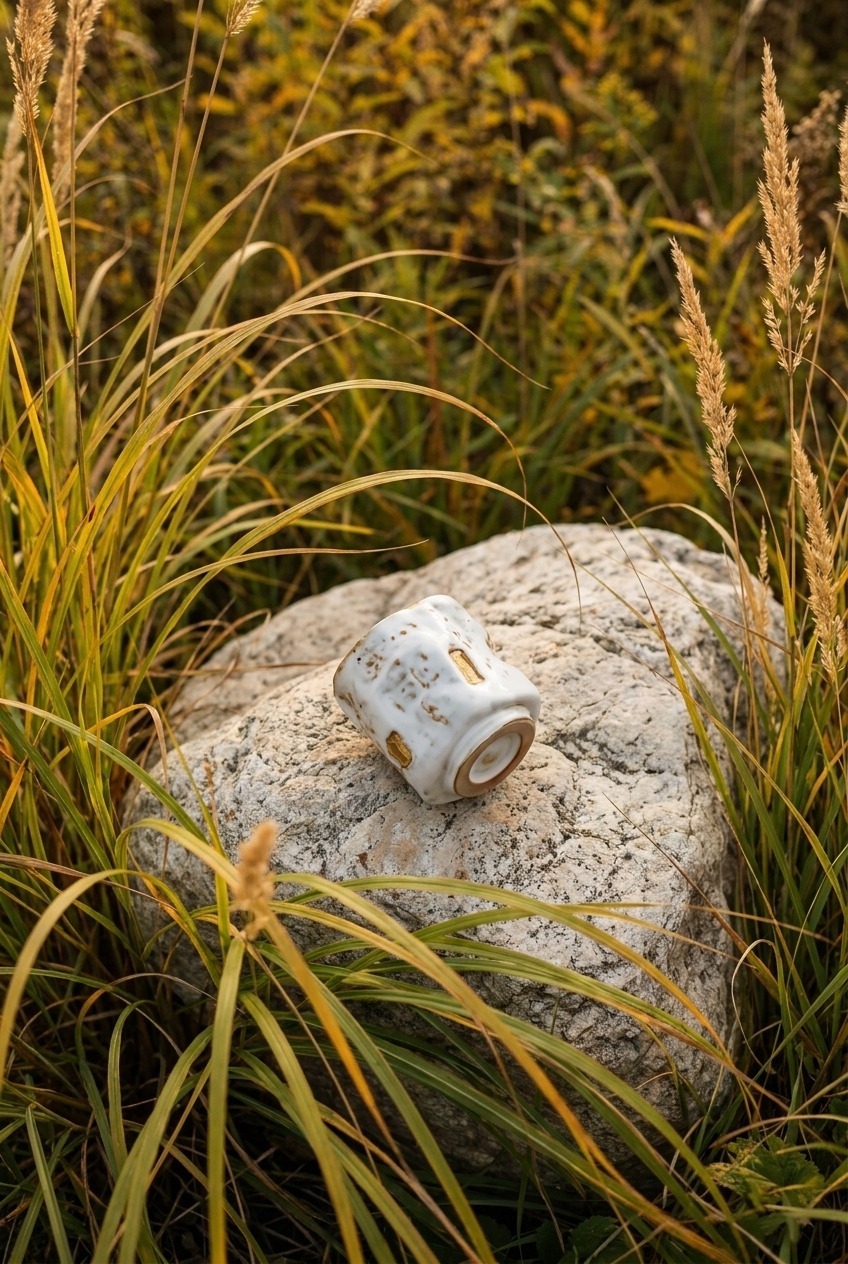
The implication is significant: if slow living lifestyle is practised in a material environment filled with objects designed for efficiency, uniformity, and disposability — objects that provide no tactile variation, no visual complexity, no sensory reward for sustained attention — the practice is working against the grain of its own surroundings. The living intentions of slowing down, being present, attending to the texture of daily life are undermined by objects that offer nothing to attend to. As our guide to the wabi-sabi sanctuary and material honesty explores, the most effective environments for presence are those in which the objects themselves reward the quality of attention you are trying to cultivate.
2. How Objects Shape Practice — Not Just Decorate It
There is a well-established body of research in environmental psychology confirming that the physical environment shapes cognitive and emotional states in ways that are largely below conscious awareness. The weight of an object influences judgments about importance. The texture of a surface influences assessments of care and quality. The temperature of something held in the hands influences social warmth and emotional openness. These are not metaphors. They are documented physiological effects of the material world on the nervous system.
ResearchGate-published research on mindfulness and consumption patterns found that mindful consumers — those who approach their material environment with deliberate attention rather than automatic habit — demonstrate greater capacity for savoring: the ability to stay engaged with and derive pleasure from an experience for longer, rather than habituating quickly and moving on. Crucially, this research found that the objects most associated with sustained savoring were those with genuine material complexity — objects that reveal something different at each encounter, that have surface variation, that engage multiple sensory channels simultaneously rather than delivering a single uniform stimulus.
For a slow living lifestyle practitioner, this research points to a specific criterion for object selection that has nothing to do with aesthetics or price: does this object give me something to attend to? A mass-produced mug with a smooth, uniform glaze provides one sensory encounter — the first. A handmade cup from mineral-rich clay with visible surface variation, weight that shifts slightly as the liquid inside moves, warmth that transfers slowly and unevenly through a thick wall — provides a different encounter every time it is held. This is not luxury. It is the material precondition for the kind of sustained sensory attention that slow living is trying to cultivate.
The difference, summarised:
|
Mass-produced object |
Handmade mineral-clay object |
| First encounter |
Same experience every time |
Something new noticed each time |
| Surface |
Uniform, smooth |
Variable texture, weight, warmth |
| Over time |
Habituation — stops being noticed |
Develops patina, becomes more specific |
| Role in a practice |
Passive — just present |
Active — gives attention something to do |
3. Grounding Energy and the Tactile Dimension of Intentional Living
The term grounding energy describes something specific: the quality of presence produced when the nervous system is anchored in immediate physical sensation rather than floating in abstract thought. It is the opposite of the dissociative, screen-mediated quality of attention that characterises most of modern daily life — the state in which the body is present but the mind is elsewhere, scrolling through a feed or rehearsing tomorrow's concerns.
Positive Psychology's research on grounding techniques identifies deliberate tactile engagement — concentrating on the specific weight, temperature, and surface texture of an object held in the hands — as one of the most reliable methods for producing the grounding energy state: returning the scattered mind to the body, the body to the present moment, the present moment to the specific sensory reality of what is actually here. This is tactile sensory experience as a psychological intervention: not a metaphor for being grounded, but the literal mechanism by which the nervous system re-establishes its connection to the present.
The objects best suited to producing this grounding energy are those with the most genuine tactile complexity: weight that is noticed, warmth that is felt, surface that registers as specific rather than generic. A thin-walled factory cup with a smooth glaze provides minimal tactile engagement — it is held and drunk from, but it does not particularly invite the hands to notice it. A dense, hand-thrown cup from coarse mineral clay with a rough, mineral-rich exterior surface invites the hands to notice it. Every time it is lifted, the weight is present. Every time it is held still, the warmth moves through the walls. Every time the fingers move across the surface, the specific texture of that specific cup is communicated. This is what our guide to self-care objects and their role in daily practice describes as an object with genuine practice value: not beautiful in the conventional decorative sense, but present in the functional sense — something that makes the quality of attention you are trying to cultivate more available, more often.
4. The Rituals of Tea and What They Actually Require
The rituals of tea occupy a specific position in the mindful consumption conversation because they are one of the oldest and most thoroughly developed material practices for cultivating present-moment attention. The Japanese tea ceremony, the Chinese gongfu cha tradition, the more informal practice of brewing and drinking tea with full attention — all of these traditions understood, centuries before the research existed to confirm it, that the quality of the object used in a ritual shapes the quality of the attention the ritual produces.
The ceramic cup in these traditions is not interchangeable with any other vessel. It is chosen for its specific material properties: the way it holds heat, the texture of its surface against the lips and the hands, the weight that communicates the density of what it is made from, the visual character that gives the eye something to return to across the duration of a session. These are functional considerations, not aesthetic ones. As our guide to the first cup and its role as a morning anchor explains, the living intentions of slowing down and being present are directly served by the specific physical character of the object at the centre of the ritual. The ritual does not exist independently of what it is practised with.
This has a practical implication that is often overlooked in discussions of slow living lifestyle: you can have all the right intentions and none of the right objects, and the practice will be harder than it needs to be. The mind that is trying to return to the present moment in the middle of a busy morning needs the cup to meet it halfway — to provide enough physical presence, enough tactile sensory experience, enough sensory specificity to make the return worth making. An object that offers nothing to attend to cannot serve this function, regardless of how good the tea inside it is.
5. High Ground Energy: Why Craft Objects Carry a Different Quality of Presence
The concept of high ground energy — the quality of calm, settled, unforced presence associated with being genuinely grounded rather than performing groundedness — is increasingly used in the slow living lifestyle and wellness communities to describe the specific felt quality that some environments and objects produce. It is the opposite of the anxious, reaching, ever-unsatisfied quality of attention that consumer culture tends to cultivate. High ground energy does not accumulate through acquisition. It is produced by depth of engagement with what is already present.
Craft objects — handmade, from natural materials, carrying in their surfaces the visible record of their making — tend to support high ground energy environments more effectively than mass-produced equivalents. The reason is not mystical: it is material. As our analysis of handmade versus factory-made ceramics explains, a hand-formed piece carries information in its surface that a moulded piece structurally cannot: the record of the forming process, the specific response of that clay body to those hands, the marks of the kiln. This surface information is not decoration — it is the material equivalent of a conversation. Every time you look at or hold the object, there is something to notice that was not fully noticed before. This is what gives the object its quality of presence: not that it is rare or expensive, but that it rewards sustained attention rather than exhausting itself in a single encounter.
For mindful consumption practice, this distinction between objects that reward attention and objects that exhaust it on first encounter is the most useful criterion for choosing what to surround yourself with. The living intentions of slow living are served by the former category: objects that invite the eye and the hand to return, that reveal something on the third encounter that was not apparent on the first, that develop character through use rather than degrading with it. These objects do not need to be expensive. They need to be made with enough genuine craft that the surface has something to say.
6. Living Intentions: Choosing Objects the Slow Living Way
Translating mindful consumption principles into actual object choices does not require a complete overhaul of everything you own. It requires a change in the criterion by which things are chosen — a shift from "does this satisfy a need efficiently?" to "does this reward the quality of attention I am trying to cultivate?"
Applied to the objects most present in a daily slow living practice — the cup, the vessel, the surface you return to each morning — this criterion produces specific guidance. Choose objects made from natural materials that carry their own sensory character rather than synthetic materials designed to minimise sensory presence. Choose objects with surface variation — texture, weight, warmth — that register differently at different moments rather than objects designed to be as uniform and frictionless as possible. Choose objects made by hands rather than machines where the choice is available, because hand-formed objects carry the evidence of their making in a way that machine-made objects do not.
These are living intentions made material: the decision to furnish the moments of daily practice with objects that participate in the practice rather than objects that are merely present during it. The difference is small in any single moment. Across a year of daily use, across the accumulated weight of ten thousand mornings with the same cup, the difference is the difference between a practice that grows and one that stays flat — between an object that has become part of the texture of your life and one that you simply own.
7. Frequently Asked Questions
What is mindful consumption and how does it differ from minimalism?
As the ScienceDirect systematic review of mindful consumption research explains, mindful consumption is the practice of bringing deliberate attention to what you acquire and use — asking not only "do I need this?" (the minimalist question) but "does this serve the quality of attention and experience I want in my life?" Minimalism focuses primarily on reduction: owning less as a path to psychological freedom. Mindful consumption focuses on depth of engagement: owning the right things — things that reward sustained attention — rather than the fewest things. The two are compatible but distinct. A mindful consumer might own relatively few objects but choose each one with considerable care for its material character and its capacity to serve a living intention. The criterion is not quantity but quality of engagement.
How does grounding energy relate to the objects in your home?
Grounding energy describes the physiological state produced when the nervous system is anchored in present-moment sensory experience rather than abstract thought. The physical environment contributes to or detracts from this state depending on the sensory qualities of the objects in it. Objects with genuine tactile presence — weight, texture, warmth, surface variation — provide the sensory anchors that support grounding. Objects designed for efficiency and uniformity provide minimal sensory engagement and therefore minimal grounding support. This is not a spiritual claim but a physiological one: the body cannot be grounded in the present moment through objects that give it nothing to feel. The high ground energy quality of a well-chosen material environment is the accumulated effect of objects that consistently provide sensory anchors for present-moment attention.
Why do the rituals of tea require a specific kind of cup?
The rituals of tea have always been understood, in the traditions that developed them, as practices in which the material object at the centre of the ritual is inseparable from the quality of the practice itself. The cup is not interchangeable — its weight, its surface, its thermal character, the way it holds warmth and communicates that warmth to the hands — these are functional variables that directly affect the quality of attention the ritual produces. A cup that is light, smooth, and thermally neutral provides less sensory anchoring than a cup that is dense, textured, and warm. The former can be used for a tea ritual, but the latter supports the ritual in a way the former does not. This is the material basis of slow living: the objects you choose for your practices either support the quality of attention those practices are designed to cultivate, or they do not. The choice matters.
A Final Note
The slow living lifestyle is often described as a practice of subtraction: doing less, owning less, committing less. This is partly right. But the more precise description is a practice of depth: engaging more fully with fewer things, returning more completely to the present moment, finding more in each encounter with what is already here. This depth cannot be produced by intention alone. It requires a material environment that supports it — objects that reward the quality of attention you are trying to bring, that give the hands something to feel and the eye something to return to, that develop rather than degrade with use.
Mindful consumption is not about buying things that signal a slow living identity. It is about choosing the objects that will be present in the moments when you are trying to be present — and choosing them with enough care that they can do their part. The practice does the rest. But the right object, held in the right moment, makes the practice easier than it would otherwise be. That is the material basis of slow living: not what you do, but what you hold while you do it.
Related Articles
References


