In short: A physical comfort object works because it offers something a card or a phone call cannot — consistency a person can return to, daily, with their hands. Research on childhood attachment (Winnicott, 1953) and on grief and touch (2024, Death Studies) both point to the same mechanism: the object's value isn't symbolic, it's physiological. It's always there, always the same, and that steadiness is what calms the nervous system.
References
Related Articles
Someone you care about is going through something hard. You want to do something. You open a gift site, type comfort gift into the search bar, and immediately feel a familiar kind of stuck: everything either feels too small for the moment, or too presumptuous — as if a candle could possibly be equal to what they're carrying.
This feeling is common enough that it has a name in grief research: the "nothing feels like enough" problem. The honest answer is that no object will fix what's happening. But that was never really the job a thinking of you gift was meant to do. Its job is smaller, and more achievable: to say, in a form that doesn't require them to respond, I am thinking of you, and I am still here. Below are six ways people actually do this well — along with the research on why a physical object, specifically, often communicates this better than a card full of words.
1. The Problem With "I Don't Know What to Say"
Most sympathy gift ideas lists assume the hard part is choosing the object. In practice, the hard part is usually earlier than that — it's the fear of getting the tone wrong. Too cheerful feels dismissive. Too heavy feels like it's asking the person to perform their grief for your benefit. Too generic feels like it could have been sent by anyone.
There is a way out of this bind, and it doesn't involve finding the perfect words. It involves choosing an object whose presence speaks for itself — something that doesn't need to be read, explained, or responded to, and that can simply exist in someone's daily life as a small, steady reminder that they are not alone in it.
2. Six Real Comfort Gift Ideas
These six categories cover most of what genuinely helps — not because they are clever, but because each one does something specific that pure sentiment cannot.
A weighted blanket
The evenly distributed pressure of a weighted blanket has a measurable physiological effect. In a 2008 study in Occupational Therapy in Mental Health, 32 adults using a 30 lb weighted blanket reported a 63% reduction in anxiety, and 78% preferred it as a calming method over other options tested. This is part of why weighted blankets have become a common recommendation specifically for grief and anxiety — the effect works at the level of the nervous system, not the level of meaning.
A handwritten letter, or a recorded voice message
Unlike a text, a letter or a voice note can be returned to. It does not need an immediate reply, and it does not disappear in a scroll. For someone who can't face a phone call yet, a voice message they can listen to alone, on their own time, often lands better than a call they have to perform composure for.
A meal, or the means to make one without effort
Grief and hard stretches of life make ordinary tasks — deciding what to eat, cooking it — disproportionately exhausting. A meal delivery, a stocked freezer, or a simple care package of things that require no decisions removes one category of daily friction entirely.
A living plant
Something that needs occasional, gentle attention — water, light — gives a small, low-stakes task to return to. This isn't just anecdotal: a 2024 survey by the UK bereavement charity Sue Ryder found that 56% of bereaved respondents said gardening or caring for plants gave them a sense of routine and purpose during grief, and 40% said it had meaningfully helped them cope. Caring for something else, even minimally, has been used informally in grief support as a way to keep a person gently anchored to routine without demanding much of them.
Practical help, offered specifically rather than vaguely
"Let me know if you need anything" places the burden of asking back on the person already carrying the most. A more useful version names the task directly: picking up groceries, taking the dog out, sitting with them in silence. Specificity is what makes an offer usable.
An object meant to be touched, daily
This is the category explored in depth below — a physical object, kept close, that becomes part of someone's daily routine rather than a one-time gesture. A handmade ceramic cup is one example, but the category is broader: anything with weight, texture, and a place in someone's hands.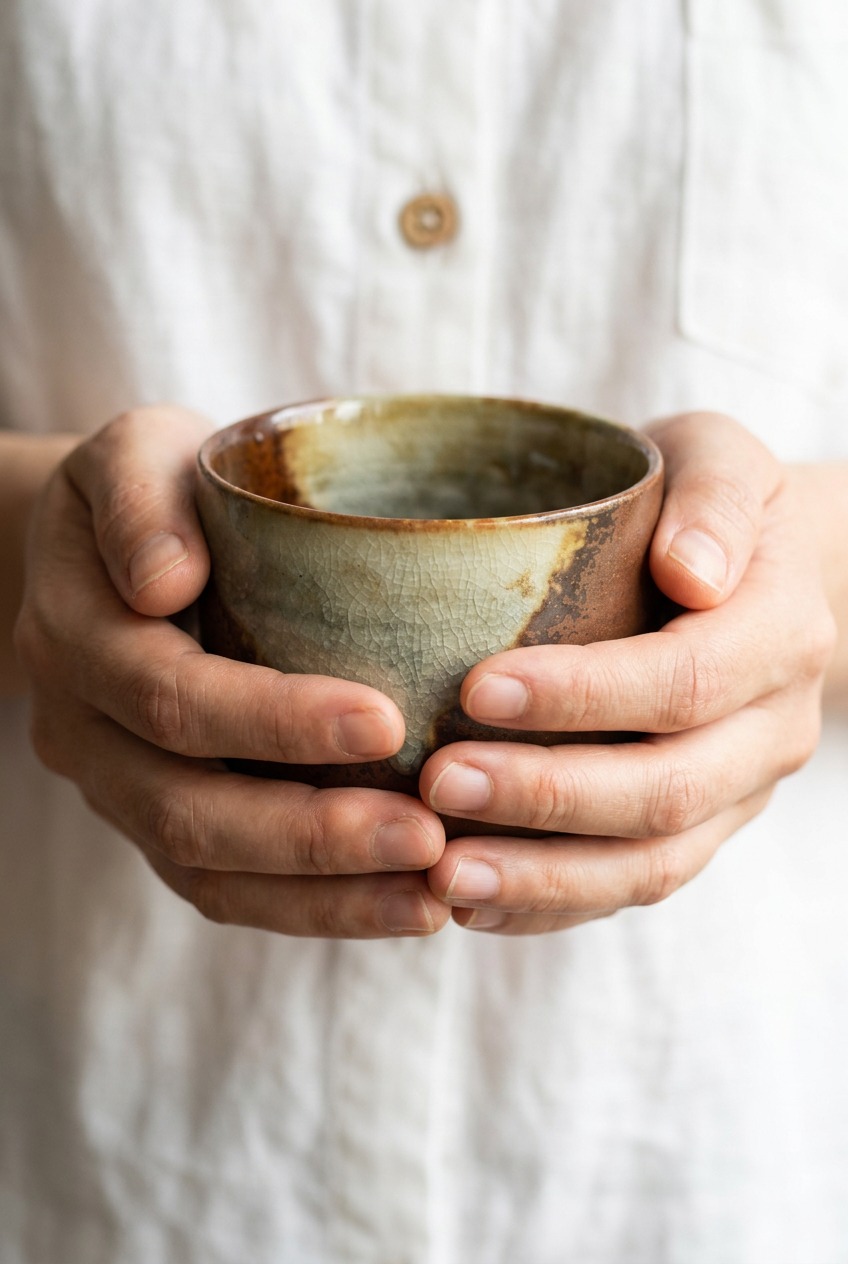
3. The Psychology of Why Objects Help
There is a reason the sixth category above deserves more attention than the others — it is the one backed by the deepest body of research, dating back over seventy years.
Transitional object (n.): an item — first defined by psychoanalyst D.W. Winnicott in a 1953 paper — that provides psychological comfort through its consistency and constant availability, independent of another person's presence. Originally studied in young children (blankets, soft toys), the concept has since been extended by researchers to adult attachment and grief.
In 1953, psychoanalyst D.W. Winnicott published a paper describing what he called the "transitional object" — an item, often a blanket or a soft toy, that a young child becomes attached to during the developmental process of separating from a caregiver. Winnicott's insight, since widely confirmed and extended by later researchers, was that the object itself doesn't do anything magical — its value comes from its consistency. It is always there, always the same, and always available, in a way that even a loving caregiver cannot always be. This is what allows it to provide comfort independent of anyone else's presence.
 Gift a sense of tranquil connection that goes beyond ordinary presents. When searching for unique gifts for her that resonate with nature and inner balance, a sculpted ceramic cup offers a daily physical anchor. Whether you need romantic yet grounding birthday gift ideas for a wife or looking for soulful birthday gift ideas for women who practice slow living, this handcrafted piece carries the soothing spirit of water wherever she goes.
What Winnicott described in infants, later research has confirmed extends well into adulthood. A 2024 study on body perception and social touch preferences during grief found that tactile interaction allows a grieving person to experience grounding and support on a more visceral level than verbal expressions of sympathy can provide. Touch — including touch of an object, not only another person — has a documented stress-buffering effect, associated with reduced cortisol and increased oxytocin.
This research helps explain something that our guide to tea meditation covers from a different angle: a simple physical action, repeated with attention, can shift the nervous system in ways that thinking alone cannot. In grief, this same mechanism works in reverse as comfort — not the mind calming the body, but the body, through something held in the hand, calming the mind.
4. Why a Cup, Specifically, Does This Particularly Well
Most objects given as gifts for grief are encountered once and then set aside — looked at, appreciated, and placed on a shelf. A cup is different. It is one of the few gift categories that gets picked up, multiple times, every single day — which matters more than it might seem, because the comfort described in Section 3 depends on repetition, not on a single encounter.
Our guide to the morning ritual explores this same mechanism from the angle of habit formation: an object returned to at the same time, in the same way, each day becomes a kind of anchor — not because of anything mystical about the object, but because consistency itself is what the nervous system responds to. For someone in the middle of a hard stretch of life, when very little else feels stable or predictable, a cup that is always there, always the same weight in the hand, can do quiet work that nothing else in a gift box can.
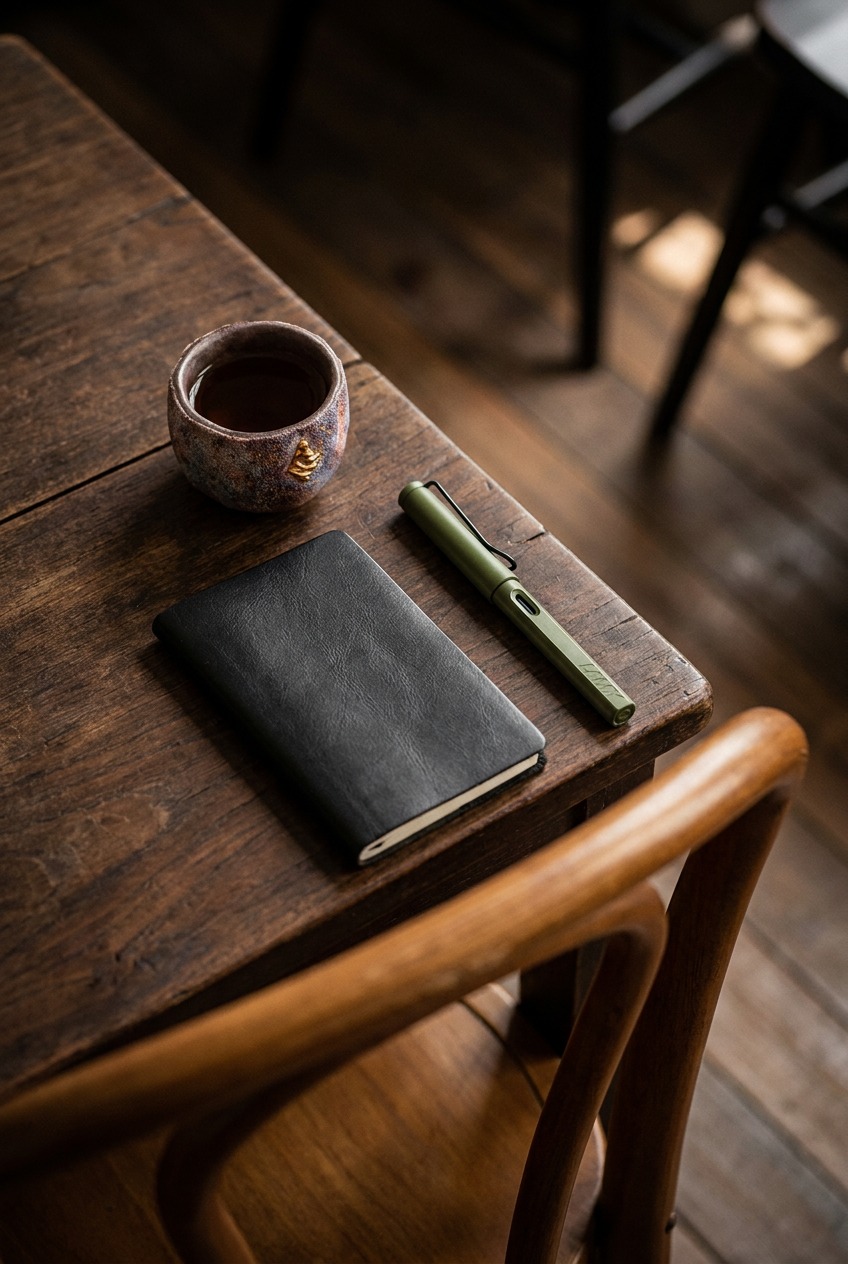 Elevating the everyday quiet moments is a meaningful act of care. For anyone curating personalized birthday gifts for her, an artisan teacup brings a grounding, tactile elegance to a morning journaling routine. If you are exploring inspirited birthday gift ideas for a sister who loves tea and mindful breaks, this unique vessel turns her desk into a personal sanctuary for focus and creative thought.
There is also a slower, longer effect. Our guide to the wabi-sabi sanctuary describes what we call the 90% rule — a handmade piece leaves the kiln roughly 90% complete, and the remaining 10% develops through use, becoming a kind of record of the time someone has spent with it. For a grief gift idea specifically, this has a particular resonance: the cup, over months, comes to hold something of the period it accompanied someone through — not as a deliberate symbol, but simply as the natural consequence of being used, daily, during a hard time.
5. What to Write, When You Don't Know What to Write
A short, honest note removes the pressure of finding the perfect words. A few starting points:
"I don't have the right words. I just wanted you to have something to hold onto."
"Thinking of you more than you probably know. No need to reply to this."
"I can't fix this, but I didn't want you to feel like no one noticed."
What these have in common is that none of them ask anything of the recipient. They don't require a response, an explanation, or even acknowledgment. That, more than any particular phrasing, is what makes a note land well during a hard time.
6. Matching the Gift to the Moment
Not every difficult period calls for the same response. A few distinctions worth considering before choosing from the list above:
|
Situation
|
What tends to help most
|
|
Recent loss (first 1-2 weeks)
|
Practical help + a brief note; avoid overwhelming with objects during the initial flood of attention
|
|
Weeks or months later, when support has quieted
|
A tactile object for daily use — this is often when it matters most
|
|
Ongoing illness or long recovery
|
Something that doesn't expire or need to be "finished" — an object, not consumables
|
|
A more distant relationship (colleague, acquaintance)
|
Keep it modest — a card with a small, simple object rather than anything elaborate
|
|
A close friend or family member
|
More personal, tactile gifts (Section 2, category 6) carry the most weight here
|
Quick reference: which of the six gift ideas fits which situation
| Gift idea |
Best when |
Relationship closeness |
| Weighted blanket |
Acute anxiety, sleep disruption |
Close friend / family |
| Letter or voice message |
Any stage; especially early |
Any |
| Meal or care package |
First 1–2 weeks |
Any |
| Living plant |
Weeks/months in, ongoing recovery |
Close friend / family |
| Specific practical help |
Any stage |
Close friend / family |
| Daily-use object (e.g. a cup) |
Weeks/months in, when it matters most |
Close friend / family; modest version for distant relationships |
7. Frequently Asked Questions
Is it appropriate to send a comfort gift to someone you're not very close to?
Generally yes, as long as the gift itself stays modest and low-pressure — most sympathy gift ideas lists agree that something simple, like a card with a small object, works better for distant relationships than anything elaborate. For more distant relationships, a brief, specific note ("I heard, and I'm thinking of you") often matters more than the object itself. Our guide to mindfulness gifts covers similar territory for gift-giving across varying degrees of closeness.
When in doubt, a brief note without an accompanying object is always appropriate and never wrong. Gifts for someone going through a hard time work best when they feel like an extension of genuine care, not an obligation being fulfilled — if you're uncertain, erring toward something small and quiet is safer than something large and attention-demanding.
What's the difference between a sympathy gift and a comfort gift?
A sympathy gift is typically tied to a specific event — a death, a diagnosis — and often arrives once, close to that event. A comfort gift is meant to be used, not just displayed: it's chosen for what it does in someone's hands over weeks or months, which is why tactile, daily-use objects (Section 2, category 6) tend to fall in this second category rather than the first.
Does a comfort gift need to be handmade, or does mass-produced work just as well?
The psychological mechanism described in Section 3 — consistency, weight, texture, repetition — doesn't require a handmade object to work. What handmade pieces add, per the 90% rule described in Section 4, is a slower, secondary effect: the object visibly changes with use, which can give it a quality of "recording" the time it accompanied someone through. That's a meaningful addition for some people and beside the point for others.
How long does the comfort from an object like this typically last?
There's no fixed timeline in the research, but the mechanism itself — consistency reinforced through repeated daily contact — means the effect tends to build over weeks and months rather than fade. Unlike a one-time gesture, a daily-use object's usefulness doesn't have a natural expiration point.


