Contents
There is a version of minimalist decorating that is simply about less: fewer objects, cleaner surfaces, rooms that look disciplined from the outside but feel cold from the inside. This version mistakes the outcome for the purpose. The point of minimalist decor is not to have less. It is to make what remains count — to give the objects, textures, and surfaces in a space the breathing room they need to actually be experienced rather than merely accumulated.
Negative space is the design principle that explains why this works. It is not the absence of something. It is an active, functional element — the empty area around and between objects that determines whether those objects have presence or simply occupy square footage. In a zen-inspired home, negative space is not incidental. It is the structure within which everything meaningful becomes visible.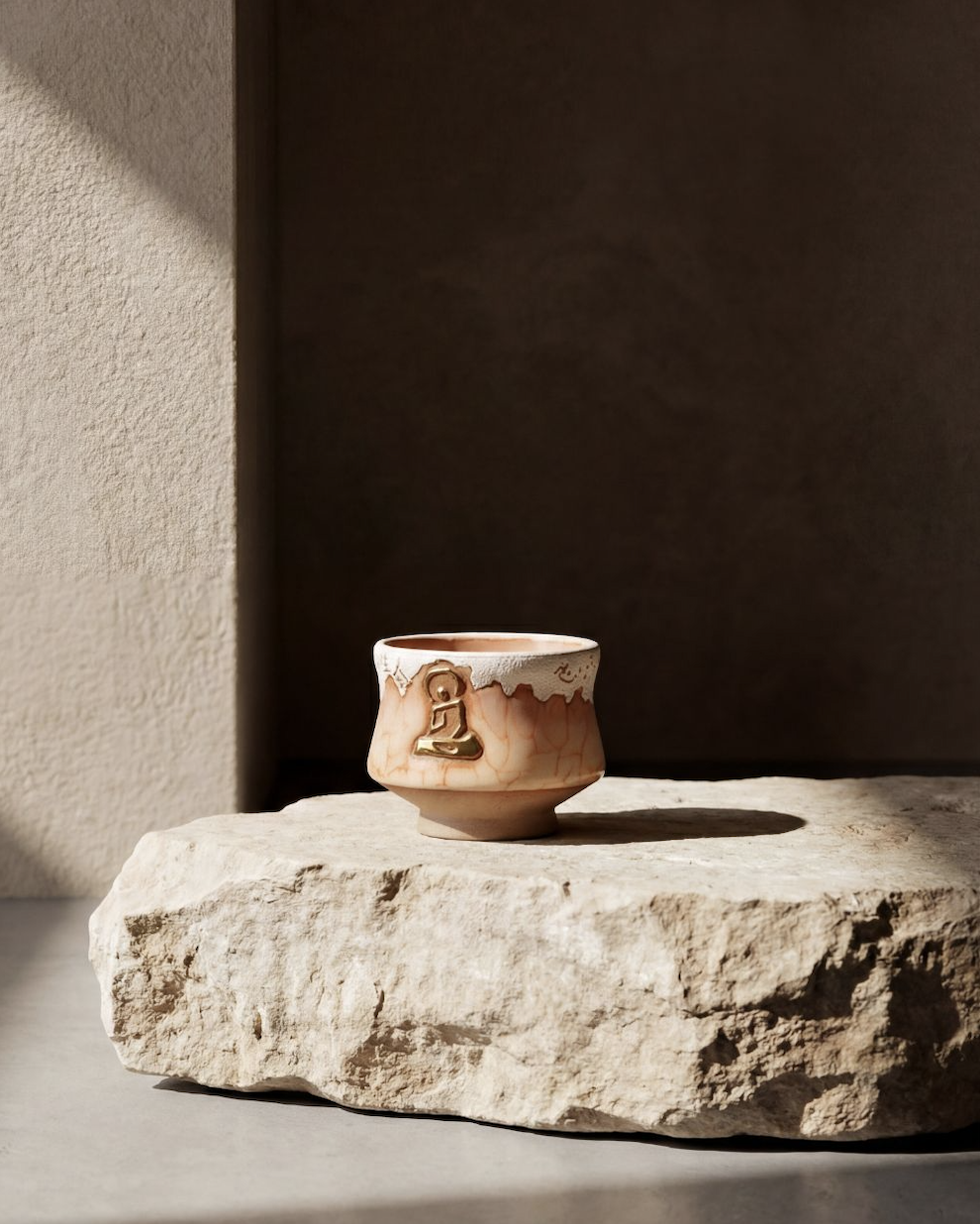
Create a peaceful home with minimalist decor that feels airy, balanced, and intentional. Use these Zen-inspired ideas and save for later.
1. What Negative Space Actually Is — and What It Does
As Skillshare's analysis of negative space in design explains, negative space — also called white space or blank space — is the area surrounding and between the primary elements of a composition. In visual disciplines, it serves a role that is easy to overlook: while positive space contains the focal points, negative space provides the breathing room that allows those focal points to stand out. Without it, even beautiful objects compete for attention rather than receiving it.
Research in environmental psychology demonstrates that negative space directly influences stress levels and cognitive function. When surrounded by visual clutter, the mind works overtime processing competing stimuli. Well-planned emptiness, by contrast, allows attention to focus — creating what designers call visual breathing room. This is not aesthetic theory. It is measurable neuroscience: the brain processes everything in its visual field, whether or not you are consciously looking at it.
Interior designer Dre Shapiro, quoted in Homes & Gardens, puts it precisely: allowing objects room to breathe gives each piece greater presence and importance. Rather than competing for attention, each item is elevated through restraint. Negative space, in this sense, becomes a form of emphasis — not decoration, but the condition under which decoration becomes meaningful.
2. Minimalist Decor Is Not About Emptiness
The most common misreading of minimalist decor is the equation of minimalism with deprivation: fewer things, flatter surfaces, rooms that feel unoccupied even when lived in. This misreading produces spaces that are visually quiet but humanly cold — aesthetically correct but experientially absent.
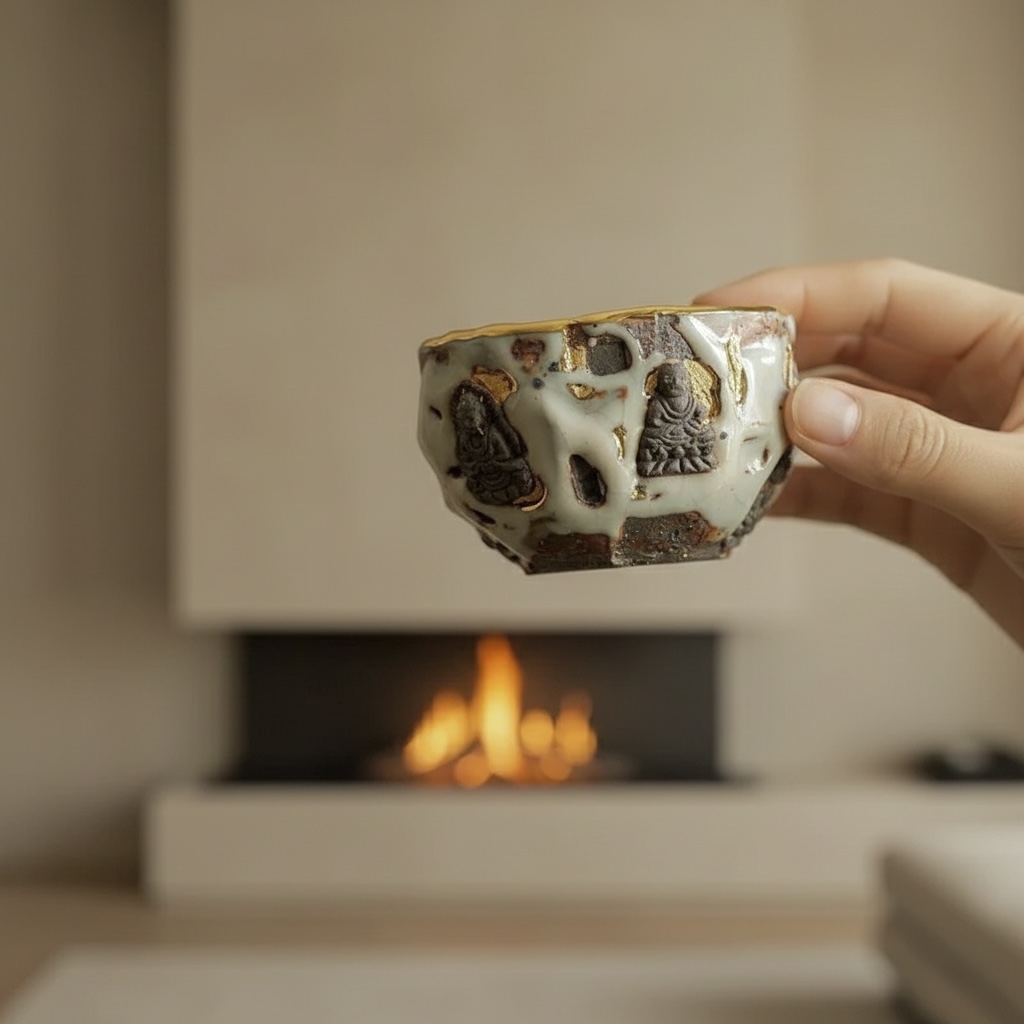
Made in fire, held beside fire. The Resilient Gold carries its kiln marks the way a room carries warmth — not as decoration, but as evidence of something that actually happened. One piece, held in one hand, in front of a fireplace: this is minimalist decor reduced to its simplest argument.
The more useful frame is editorial. A well-edited room is not empty. It contains exactly what it needs to contain — objects chosen for their quality of presence, surfaces arranged so that what is there can be fully registered. As Domkapa's guide to negative space in interior design notes, when everything calls attention to itself, nothing stands out. Strategic negative space directs the eye toward the elements that matter most, allowing them to make the impact they deserve.
This is why the quality of the objects that remain matters as much as the quantity removed. In a room with few objects, each one is visible — fully, specifically, without competition. An object of genuine quality — handmade, materially honest, with a surface that rewards close attention — earns its place in this context in a way that a mass-produced piece does not. Our exploration of why handmade objects become more meaningful over time addresses exactly this: in a zen home decor context, fewer objects chosen with more care is not a compromise. It is the point.
3. Japandi Interior Design: Where Two Minimalist Traditions Meet
Japandi is a design fusion that has become one of the defining interior aesthetics of the mid-2020s — a blend of Japanese minimalism and Scandinavian functionality that shares a common ground in restraint, natural materials, and the principle that every object in a space should serve both an aesthetic and a practical purpose. As Artera Home describes it, Japandi combines the Japanese concept of wabi-sabi — which appreciates imperfection and the beauty of natural aging — with the Scandinavian idea of hygge, emphasising coziness and comfort within a minimalist framework.
For japandi interior design ideas, the practical starting point is material and palette: light woods, muted neutrals, earthy tones, and handcrafted pieces that carry visible evidence of their making. The shared philosophy of both Japanese and Scandinavian design traditions — quality over quantity, craftsmanship over production, the long-lasting over the fashionable — produces spaces that feel settled rather than styled.
i.Poise Design's comparison of wabi-sabi and Japandi draws a useful distinction: Japandi spaces are structured yet cosy, calm yet highly functional. The focus is on quality over quantity, with carefully chosen pieces that serve both an aesthetic and practical purpose. The negative space in a Japandi room is not accidental — it is what remains after the discipline of removing everything that does not belong. Japandi style accessories are chosen by the same logic: a handmade ceramic piece, a river stone, a single dried branch — objects with material honesty and quiet presence that do not compete with the room they inhabit.
4. How to Style a Shelf Without Filling It
Shelf styling, distilled:
|
Guidance |
| Keep |
Objects with genuine presence — handmade ceramics, fired stoneware, natural stone, driftwood. Things with surface complexity that reward close looking |
| Remove |
Anything that arrived rather than was chosen. Multiples of the same object. Pieces that only work in a group |
| Rule of odd numbers |
Groups of three — one dominant, one secondary, one punctuation. Vary height and scale, not style |
The shelf is where minimalist decor most often fails. The impulse is to fill it — to treat the shelf as a surface that needs to be occupied rather than a stage that needs to be curated. The result is a collection that reads as accumulation: objects that were individually meaningful but have become collectively invisible because there is no space for any of them to breathe.
Japandi style shelf styling operates on a principle of deliberate incompleteness: never use more than 60 to 70 percent of a shelf's available space, and treat the empty portion as a design element rather than a gap to be filled. What remains on the shelf should justify its position through a combination of height variation, material contrast, and individual presence. A tall ceramic vessel, a lower stone, a single object with a complex surface — three elements with enough space between them that each one reads clearly. The earthy aesthetic principles we explore in our morning ritual guide apply here directly: texture and material variation do more work in a minimalist space than colour or pattern, because they give the eye something to engage with at close range without adding visual weight from across the room.
What to keep on a minimalist shelf: Objects with enough physical presence to hold their position in an uncluttered space. Handmade ceramics, fired stoneware, natural stone, pieces of driftwood or unpolished mineral. Things with surface complexity — variation in glaze, texture, or material — that reward looking at them closely.
What to remove: Anything that is there because it arrived rather than because it was chosen. Multiples of the same type of object. Items whose primary virtue is that they fit the colour scheme. Pieces that look better in a group than alone — in a minimalist context, that quality works against them.
The rule of odd numbers: In minimalist shelf styling, groups of three tend to work better than groups of two or four — one object reading as dominant, one as secondary, one as punctuation. Vary the height and scale, not the style.
5. The Wabi-Sabi Approach to Surfaces and Objects
Wabi-sabi, the Japanese philosophy of finding beauty in imperfection, impermanence, and incompleteness, is the underlying sensibility of much of what makes zen home decor feel inhabited rather than staged. Where conventional interior aesthetics seek objects that are perfect and uniform, wabi-sabi seeks objects that carry the evidence of their making, their use, and their time.
In a minimalist space, wabi-sabi objects earn their position because they do not need anything else around them to make sense. A wood-fired ceramic bowl with ash glaze marks, a stone with visible mineral variation, a piece of linen that has been washed enough times to show its texture — these objects are complete in themselves. They do not require companions or context. They are legible alone, which is exactly what negative space demands of the objects placed within it.
Wabi-sabi shelf decor applies this logic to the most visible horizontal surfaces in a home. Rather than styled arrangements that require maintenance to remain intact, wabi-sabi shelf objects hold their position because they are placed with enough intention to be self-sufficient. Our deep guide to constructing a wabi-sabi sanctuary explores this in full: the philosophy of material honesty — using objects that are exactly what they appear to be, that do not simulate a quality they do not possess — creates surfaces that feel more settled, more trustworthy, and more genuinely calm than those decorated with objects chosen for their style value alone.
6. The Earthy Aesthetic and Negative Space
The earthy aesthetic — warm neutrals, natural textures, materials that carry the evidence of their origin — works particularly well within a minimalist framework because its visual weight is tactile rather than visual. An earthy-toned ceramic piece, a rough linen textile, a piece of unpolished wood: these objects are visually quiet enough to coexist with negative space without competing against it, while being materially interesting enough to justify the attention that an uncluttered room directs toward them.
The Stone Sanctuary on stone. The cup and the surface it rests on are made of the same logic — dense, unpolished, marked by time and pressure. This is the earthy aesthetic, not as a design choice but as a material fact: an object that belongs exactly where it is, needing nothing around it to make sense.
The colour palette of earthy minimalism — clay, warm beige, stone grey, dark charcoal, the natural tone of fired stoneware — has the further advantage of reading as restful. These are colours that the human perceptual system associates with natural environments: soil, bark, dried grass, unpolished mineral. Research consistently links exposure to natural tones and materials with reduced cortisol and improved sense of calm — the same mechanism that makes time spent in nature restorative. An earthy minimalist interior draws on this association to create spaces that feel physiologically as well as aesthetically settled.
The earthy aesthetic and the principle of negative space are, in this sense, natural complements. Both resist the impulse to fill. Both ask that what is present be noticed fully rather than scanned quickly. Both produce rooms that feel deliberate — that communicate, quietly and without effort, that someone has thought carefully about what belongs here and what does not. In a minimalist decor context, this quality of deliberateness is not a luxury. It is the whole point.
7. Frequently Asked Questions
How is minimalist decor different from just having an empty room?
The difference is intentionality. An empty room lacks objects because nothing has been chosen. A minimalist room has exactly the objects it needs — chosen specifically because they have enough presence and quality to justify occupying space in a room with very little in it. The negative space in a minimalist interior is not a gap waiting to be filled. It is an active design element: the condition under which the objects that remain can be fully seen. An empty room feels abandoned. A minimalist room feels considered. The distinction is whether the emptiness is purposeful or simply the absence of decision.
What makes a good japandi style accessories choice for a minimalist home?
Three criteria for a Japandi accessory:
| Criterion |
What it means |
| Material honesty |
Natural material in relatively unprocessed state — unglazed ceramic, raw wood, stone, linen |
| Individual presence |
Legible on its own, without needing companion objects |
| Surface complexity |
Rewards close attention — texture or glaze that shifts with light or angle |
A good Japandi accessory for a minimalist context needs to meet three criteria. First, material honesty: it should be made from a natural material in its relatively unprocessed state — unglazed or simply glazed ceramics, raw or lightly finished wood, stone, linen. Second, individual presence: it should be legible on its own, without requiring companion objects to make sense. Third, surface complexity: it should reward close attention — offering variation in texture, glaze, or material that changes slightly depending on the light or angle. Objects that meet all three criteria hold their position in a minimalist space. Objects that meet only one or two tend to disappear into it or, conversely, compete with the emptiness around them.
Can an earthy aesthetic work in a small space, or does minimalism require large rooms?
Minimalism works better in small spaces than large ones, because the discipline of negative space creates the illusion of more room rather than requiring more room to begin with. An earthy aesthetic amplifies this effect: warm, natural tones recede visually rather than advancing, making surfaces feel further away than they are. The practical approach for a small space is to be more disciplined about what remains on each surface, not less — one object per shelf rather than three, one textile rather than several, clear sightlines from one side of the room to the other. The visual breathing room that results reads as spaciousness. The materials — clay, wood, linen, stone — provide the warmth and tactile interest that prevent the space from reading as cold. Small rooms benefit most from the combination of minimalist decor principles and earthy materials, because the restraint does the spatial work and the texture does the human work.
A Final Note
Negative space is often described as what you leave out. This is true, but incomplete. Negative space is also what you leave in — the decision to keep this object on this surface, with this much room around it, because it deserves to be seen clearly. Minimalist decor is, at its best, a practice of sustained attention: the ongoing choice to live with less in order to experience what remains more fully. The objects that survive this editing process are not the most expensive or the most beautiful. They are the ones with enough genuine presence to justify occupying space in a room that has been designed to make every object count.
Related Articles
References


