Contents
Mindful living is often described as a practice that happens indoors — on a cushion, in a quiet room, away from distraction. But some of the most natural conditions for present-moment awareness already exist outside: the shifting quality of light through leaves, the particular temperature of morning air, the sound of wind or water or birds in a frequency that the brain registers, at some deep level, as safe. Nature doesn't require you to be mindful. It moves in that direction on its own.
Tea, brought outside, becomes something different from tea drunk at a desk or a kitchen counter. It slows the pace of wherever you are. It gives your hands something warm to hold while your eyes have somewhere real to rest. And because tea — like the natural world — changes with the season, it becomes one of the clearest threads connecting you to where you are in the year. This article is about that connection: how tea and nature connection can form the basis of a genuine outdoor practice, and why the particular qualities of a handmade cup make that practice richer.
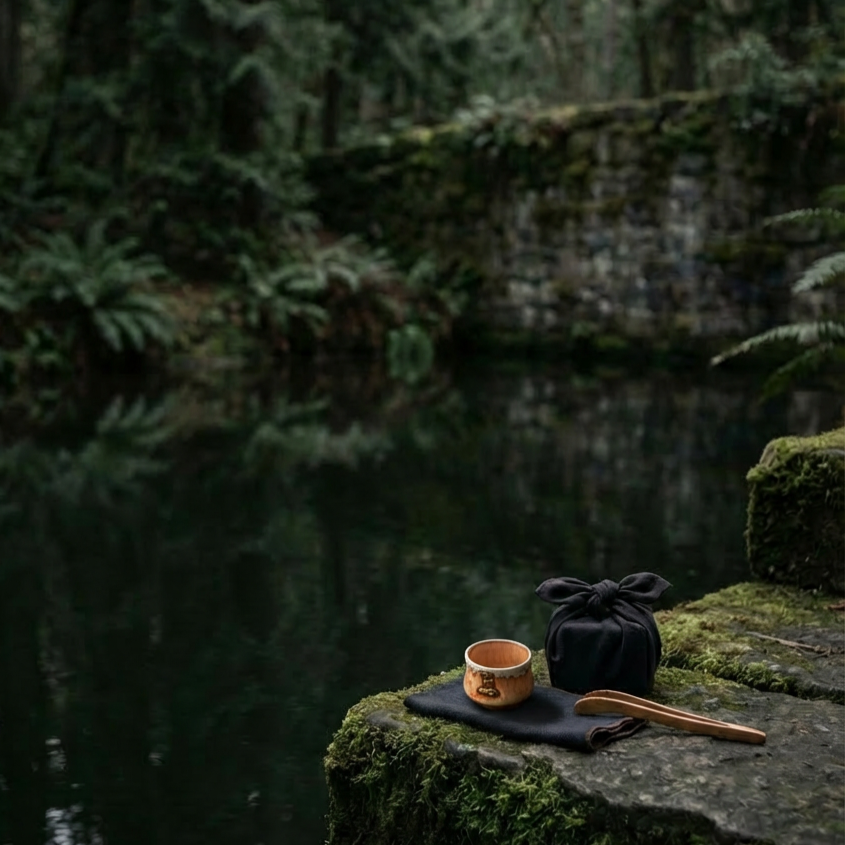
A moss-covered stone, still water, a handmade cup. The outdoor tea ritual doesn't require preparation beyond this — the right vessel, a place in nature, and the willingness to be there completely. This is what tea and nature connection looks like when it's not performed for anyone.
1. Why Nature Makes Mindfulness Easier
The psychological theory most relevant here is Attention Restoration Theory, developed by environmental psychologist Stephen Kaplan. As the Medito Foundation explains in its analysis of the research, nature draws what Kaplan calls soft fascination — effortless, gentle attention that doesn't deplete cognitive resources the way directed attention does. Looking at a tree moving in wind, watching light change on water, noticing the gradual shift in temperature as the morning progresses: these are acts of attention that restore rather than drain.

This is the mechanism behind why nature mindfulness requires less effort than indoor practice. A systematic review and meta-analysis of nature-based mindfulness found that for untrained meditators — people who find formal meditation effortful — practice in natural settings offers an accessible entry point precisely because the environment supports the attentional state that meditation seeks to cultivate. Nature does part of the work before you have made any deliberate effort.
Kaplan himself noted that the process of restoring attention in nature resembles the process of meditation: nature can hold one's attention so effortlessly that the experience becomes meditative without instruction. This is the case for sitting outside with a cup of tea in the early morning, or on a stone at the edge of a trail, or at a table in a garden with the season visibly present around you. Outdoor mindfulness is not a discipline you impose on a natural setting. It is what happens when you stop long enough to let the setting work.
2. The Outdoor Tea Ritual: What Changes When You Step Outside
An outdoor tea ritual is not a complicated thing. It is, at its simplest, the decision to drink your tea outside rather than in — and to do so with enough attention that the experience of the outdoor space becomes part of the ritual, not just a backdrop to it.
What changes when you move outside: the sensory range expands. Inside, what you are aware of is mostly the cup, the warmth, the taste. Outside, the same cup exists within a field of temperature, light, sound, smell, and movement. The wind, if there is wind. The quality of light — different at 7am than at 9am, different in March than in September. The particular smell of soil after rain, or dry grass in summer heat, or cold air in early winter. These details are not distractions from the tea. They are the rest of the experience, and they are what give tea in nature its particular quality of presence.
The ritual itself can be as minimal or as deliberate as the situation calls for. In a garden or on a balcony: a cup, a chair, ten minutes without a phone. On a trail or in a park: a thermos, a flat stone, the habit of arriving a few minutes early and sitting before you move on. The location matters less than the intention: that this cup, in this outdoor moment, is the thing you are actually doing rather than something happening alongside something else.
3. Four Seasons, Four Cups: Drinking Tea With the World
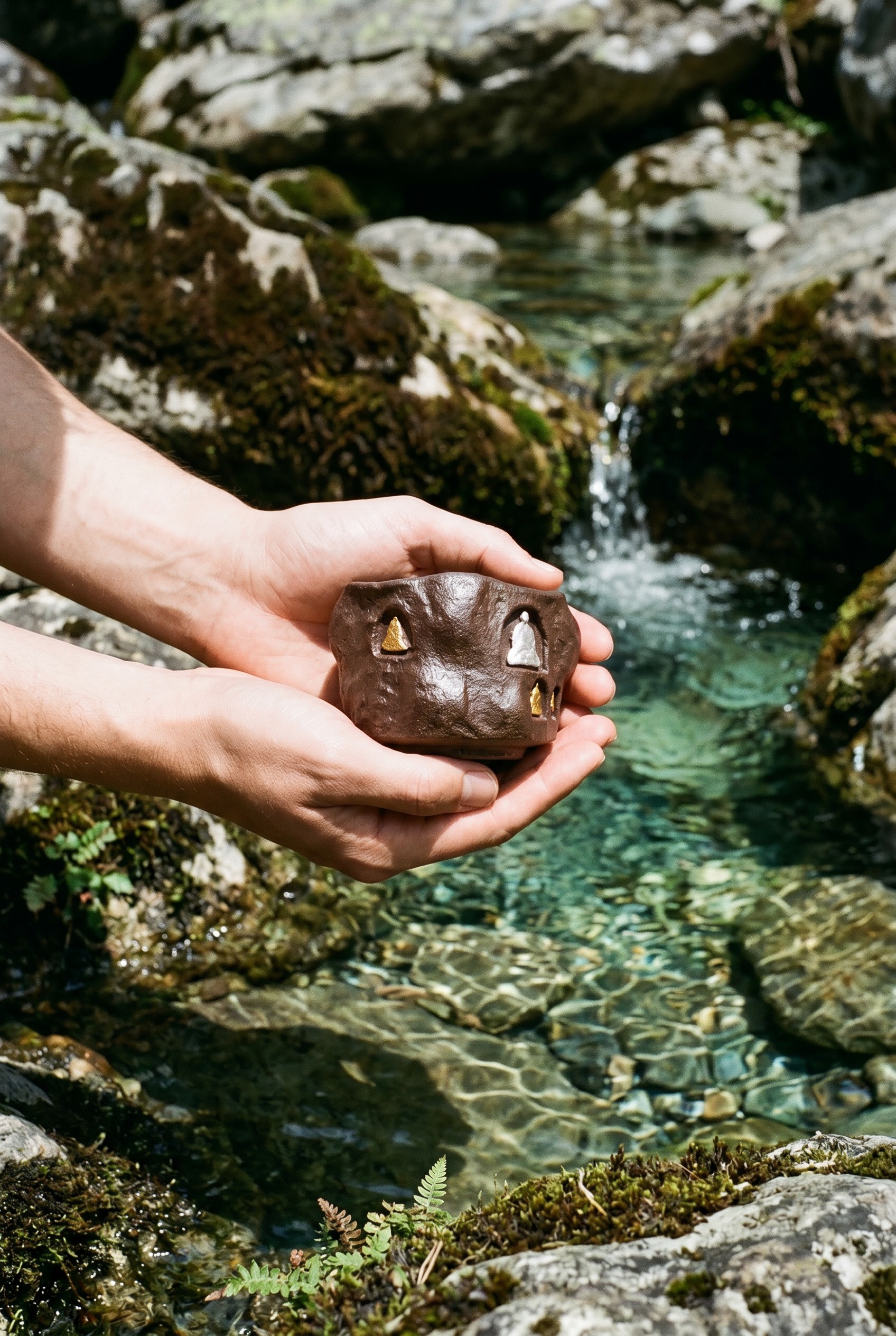
Explore how tea supports mindful living outdoors through spring, summer, fall, and winter.
One of the oldest arguments for drinking tea outdoors is that tea changes with the seasons — and so does the meaning of drinking it. This is not metaphor. Different teas are suited to different seasons, not only in terms of production (most teas are harvested in spring and autumn) but in terms of how they feel in the body in different weather. A seasonal self-care routine built around tea and outdoor time is, in practice, a way of paying attention to the year as it actually moves.
Spring. The first harvests — green teas, white teas, early oolongs — arrive as the year opens. Drunk outside on a cool morning when the light is still new and the temperature still carries winter's edge, green tea has a clarity that matches the season: fresh, slightly astringent, unambiguous. Spring outdoor tea is best in the morning, when the air is still and the quality of attention is high.
Summer. The heat changes everything. Cold-brewed teas — left in water overnight in the refrigerator, then taken outside in the early morning or evening when the temperature has relented — carry a different quality of patience. The wait is part of it. Iced oolong, cold-brewed green tea, or a simply chilled hojicha: these are summer's version of the practice, suited to shade and the unhurried pace that heat imposes.
Autumn. The season most naturally associated with tea and reflection. Darker teas — aged oolongs, pu-erh, roasted varieties — have a depth that matches the shortening days. Outside on an autumn afternoon, when the light is already amber by three o'clock and the air has the particular smell of cooling earth and turning leaves, a cup of something dark and earthy reads as exactly appropriate. The season and the tea have the same quality: rich, a little melancholic, complete.
Winter. The most inward season is also the most sensory. Cold air makes warmth more immediate — the contrast between what you are holding and what surrounds you is never sharper. A short time outside in winter with a hot cup is an exercise in noticing: the steam, the temperature differential, the way the cold makes the warmth in your hands feel significant. Winter outdoor tea doesn't need to last long. Five minutes is enough.
4. How to Build a Seasonal Self-Care Routine Around Tea
Mindful living by the season is not about following a rigid schedule. It is about small, consistent practices that keep you connected to the natural world as it changes — practices that make the transition between seasons something you notice and mark rather than something that happens without your attention.
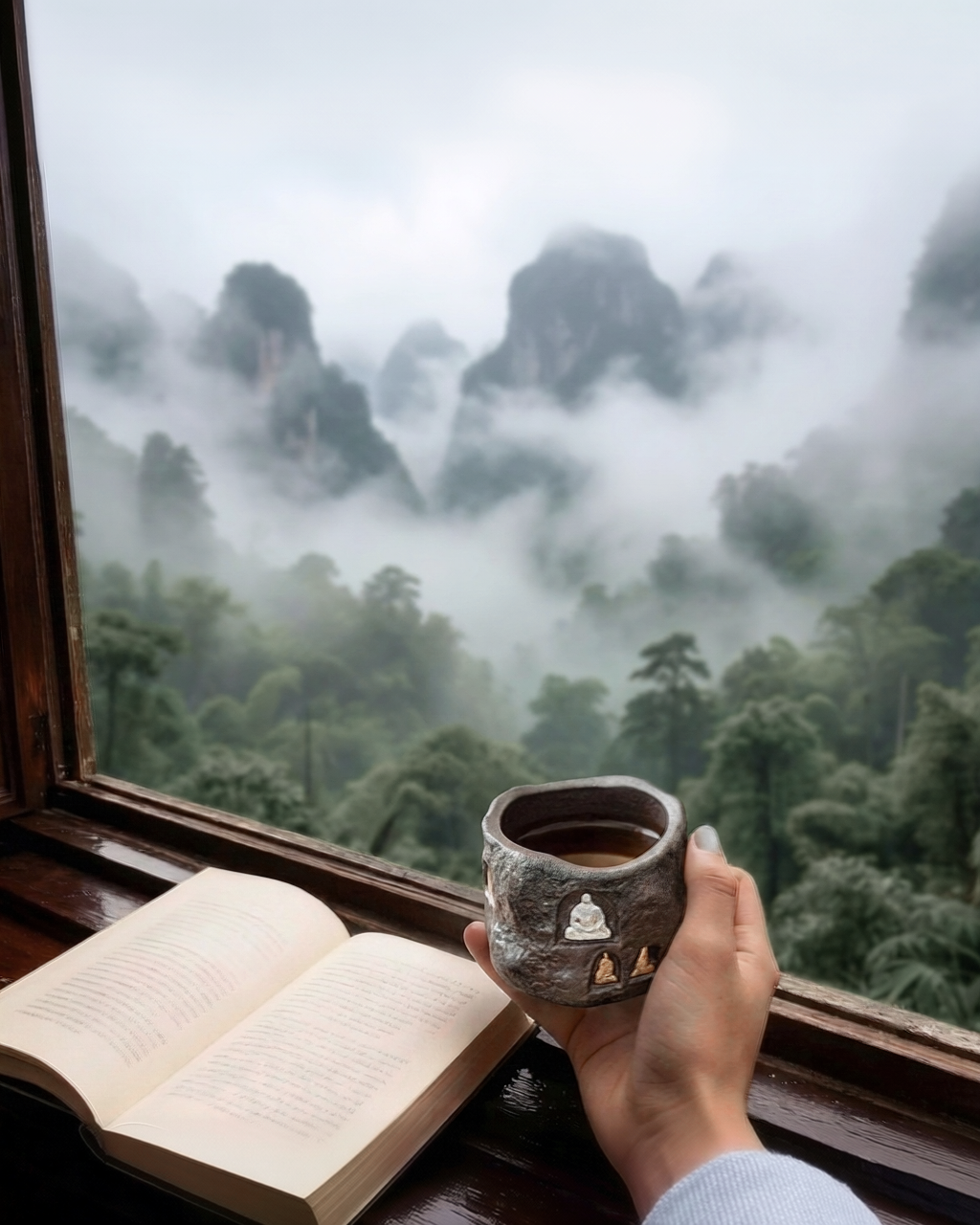
A seasonal outdoor tea practice can be as simple as this: once a week, the same outdoor spot, the same time of day, a cup of tea chosen to suit the season. Over months, the same location in the same light at the same time of day becomes a measure of the year's movement. What the trees looked like in February is different from what they look like in June. What the air smells like in September is different from October. You begin to know the year more specifically, because you have been paying attention to it from the same point of contact.
Research from the University of Colorado Boulder found that even a weekend of natural light exposure can shift the human circadian clock significantly — resetting our internal rhythms toward the season's actual light-dark cycle. As SSM Health physician Dr. Roopa Shah notes, getting outside and into natural sunlight helps reset the circadian rhythm, with downstream benefits for immune function, metabolism, and sleep. A brief outdoor tea practice doesn't require camping in the wilderness. But it does give the body a daily moment of natural light, natural air, and sensory information that the indoor environment cannot provide.
Springer Nature's review of daylight and the circadian clock notes that even an hour outdoors in the morning can significantly enhance cognitive function, alertness, and mood — effects that persist through the day. A fifteen-minute outdoor tea practice in the morning is not a negligible act. It is, in physiological terms, one of the more useful things you can do before the working day begins.
5. The Tea and Nature Connection: Why an Object Anchors the Experience
Nature mindfulness is easiest when you have a point of contact — something specific to return your attention to when it drifts. In formal outdoor practice, this is often the breath, or the sound of water, or the texture of bark under your hands. In an outdoor tea practice, the cup itself serves this function. It is warm, it is weighted, it is in your hands. When the mind moves — and it will move — the cup is where your attention comes back to.
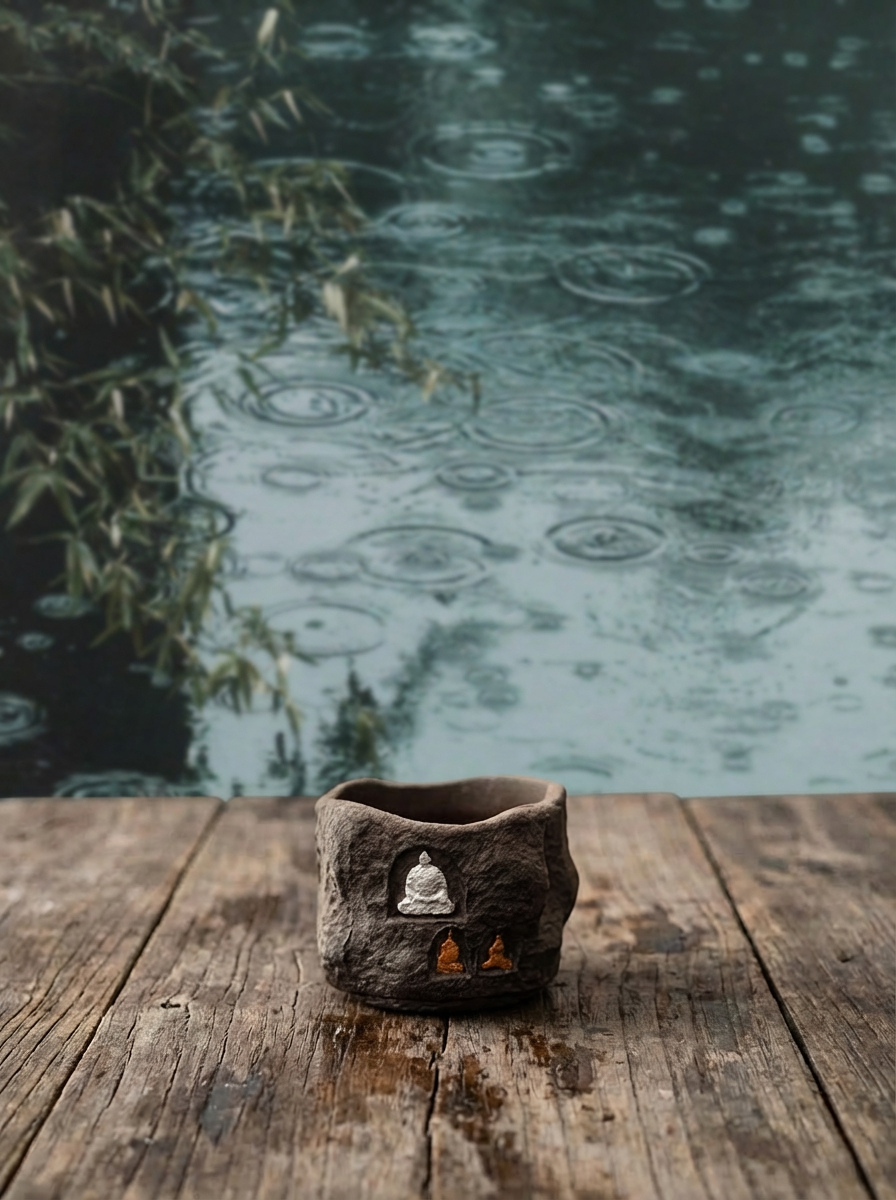
This is why the material quality of the cup matters more outdoors than it does at a desk. Outside, the cup has to hold its own against a much larger sensory field: light, sound, temperature, the visual complexity of a natural setting. A handmade ceramic piece — one with surface texture, visible glaze movement, the weight of real clay walls — has enough physical presence to remain a genuine anchor. A thin, smooth, mass-produced mug disappears into the background in a way that a piece of fired stoneware does not.
Wood-fired ceramics are especially well-suited to outdoor practice for reasons that go beyond aesthetics. Their surfaces are produced by the same elements that make the natural world interesting: fire, ash, mineral deposits, the movement of heat through clay over long hours. The result is a surface that has something in common with stone, bark, dried earth — natural textures that the eye and hand recognize. Holding a wood-fired cup outside while attending to the natural world around you creates a quiet coherence between the object and the environment. The cup belongs there. And that sense of belonging deepens the quality of attention.
Mindful living outdoors does not require elaborate preparation. It requires a cup worth holding, a place outside, and the willingness to let the season do what it does while you drink something warm — or cold, or somewhere in between. The outdoor mindfulness that results is not a technique. It is a consequence: of stopping, of being outside, of attending to the world through the simple fact of a cup in your hands.
6. Frequently Asked Questions
What is nature mindfulness, and how is it different from regular mindfulness?
Nature mindfulness is mindfulness practice conducted in or oriented toward the natural world, using the sensory qualities of natural environments as the object of attention rather than the breath or a body scan. The difference is largely one of accessibility: natural environments produce what Attention Restoration Theory calls soft fascination — effortless, gentle attention that doesn't require the discipline that indoor practice demands. Most people find it easier to be present in a natural setting than on a cushion in a quiet room, because the natural world offers the mind something interesting to attend to without effort. Formally, nature mindfulness and conventional mindfulness share the same goal: non-judgmental, present-moment awareness. The path to that goal is simply more forgiving outdoors.
How do I start an outdoor tea ritual if I don't have a garden or outdoor space?
Most urban environments offer more outdoor access than people use. A balcony, a bench in a nearby park, a step outside a front door, a rooftop — any surface where you can sit with a cup for ten minutes and be, in some meaningful sense, outside qualifies. The ritual doesn't require nature in the grand sense: a single tree visible from a city bench, the movement of clouds above a busy street, the way morning light changes the colour of a building — these are enough to practice with. The key is consistency: the same place, the same time of day, often enough that the location itself begins to carry the quality of the practice.
Does a seasonal self-care routine based on tea actually make a difference to how you experience the year?
For most people who maintain one, yes — and the mechanism is attention rather than ritual. A weekly outdoor tea practice in the same location over twelve months builds a specific, sensory knowledge of how a place changes through the year: what the light does in each season, what the air smells like, what sounds are present in March versus October. That knowledge makes the year feel inhabited rather than elapsed. The seasons become something you were inside rather than something that passed while you were elsewhere. This is, ultimately, what seasonal self-care is about — not managing the body through seasonal change, but actually experiencing the change, with enough attention that it becomes part of how you understand time.
A Final Note
The connection between tea and the natural world is older than any ritual we might build around it. Tea is a plant. It grows in specific climates, at specific altitudes, at specific times of year. The cup it is drunk from, if it is made of clay and fired in a wood kiln, is also a product of natural materials transformed by natural forces. When you take that cup outside and sit with it in whatever the season currently is, you are not imposing a practice on the natural world. You are returning something to it — a moment of attention, a quality of presence, a willingness to be where you are. The tea and nature connection is not something you have to cultivate. It already exists. You only have to step outside with the right cup and notice it.
References


